STOP LEAVING MONEY ON THE TABLE! How To Generate Massive Nike Affiliate Sales
Nike Affiliate Program – Make Money Online – How To Get Traffic And Sales
Can You Make $10,000 a Month With the Nike Affiliate Program?
This is one of the biggest questions people ask. They hear “Nike affiliate program” and instantly think massive brand, massive opportunity, and massive income. The reality is very different from the hype.
Yes, it is technically possible to make $10,000 a month with the Nike affiliate program. But for most people, it is extremely unlikely if Nike is your only source of income. The commissions are not massive, the cookie window is limited, and you need a lot of traffic to generate real income. That means you need consistent visitors, engaged buyers, and a strategy that does a lot more than just dropping shoe links everywhere.
Most beginners make a mistake. They think:
- Post shoes
• Get clicks
• Make big money
But that is not how it works.
Nike pays affiliates a percentage of each sale, which means you earn more when people buy bigger items or more frequently. To hit $10,000 a month, you either need massive traffic or you need to get strategic. The smarter approach is not to sell “shoes.” The smarter approach is to sell the result people want and let Nike be part of that ecosystem.


Instead of focusing only on Nike products, you build content around:
- Performance
• Training
• Fitness goals
• Sports improvement
• Lifestyle and athletic identity
Then Nike becomes part of the recommendation flow.
This is how people really make money in programs like this. Not by spamming product links, but by building value, building audience trust, stacking offers, and using Nike as one piece of the bigger income machine.
So yes, $10,000 a month is possible. But it requires real strategy, real effort, strong traffic, and the right business structure behind it. Not shortcuts.
Nike Affiliate Program Details
Below is a simplified breakdown of how the program generally works. Exact numbers may vary depending on the region, partner platform, and ongoing program adjustments.
| Category | Details |
| Region / Network | Available in multiple regions through affiliate networks |
| Common Networks Used | Often found on major affiliate platforms (varies by country) |
| Commission Rate | Typically a small percentage per sale (varies by category) |
| Cookie Duration | Short to moderate window depending on region and platform |
| Product Range | Shoes, sportswear, lifestyle apparel, accessories |
| Approval Requirement | Usually requires a decent site or content presence |
| Payment | Paid through the network managing the program |
| Best Use Case | Performance content, fitness niches, sports audiences |
Offers and Affiliate Benefits
Here is what makes the Nike affiliate program attractive, even with modest payouts. The strength is the brand power, buyer trust, and conversion potential.
| Offer / Benefit | What It Means for Affiliates |
| Strong Global Brand | People already trust Nike, which boosts conversions |
| Wide Product Catalog | Shoes, apparel, sports gear, lifestyle products |
| High Buying Intent | People searching Nike are often already ready to buy |
| Recognized Authority | Being associated with a massive brand adds credibility |
| Seasonal Promotions | Holiday sales, new drops, special releases |
| Niche Versatility | Works for fitness, sports, training, lifestyle, and youth markets |
| Great for Content Strategies | Reviews, comparisons, training content, and performance topics |
| Works Well with Hybrid Monetization | Pair Nike with higher-paying affiliate offers, courses, tools, or services |
Popular Basketball Shoes for Jumping Higher
Below is a detailed table of popular Nike basketball shoe lines known for cushioning, bounce, responsiveness, and explosive takeoff support. These do not magically increase vertical by themselves, but they help with stability, energy return, and comfort while you train and jump more effectively.
| Shoe Model | Cushioning / Tech | Support Type | Best For | Why People Like It for Jumping | Notes |
| Nike Zoom GT Jump | Zoom Air cushioning, high energy return | Strong ankle + midfoot support | Explosive athletes, power jumpers | Incredible bounce feeling, great impact protection | Popular among players who want max cushioning |
| Nike LeBron Series | Max Air + Zoom combinations | Strong, stable, durable build | Strong players, heavy impact jumping | Great for absorbing landings and repeated jumping | Slightly heavier but powerful cushioning |
| Nike KD Series | Full-length Zoom (varies by version) | Balanced support + flexibility | Versatile scorers, all-around play | Smooth energy response when pushing off | Comfortable feel for long games |
| Nike Kyrie Series | Responsive cushioning + grip focus | Agile movement support | Quick, shifty players | Helps with quick takeoff and aggressive first step | More court feel than thick cushioning |
| Nike Zoom Freak (Giannis) | Zoom cushioning + stability base | Strong lateral + heel support | Explosive cuts + drives | Helps players who jump out of momentum | Great mix of stability and bounce |
| Nike PG Series | Balanced cushioning with court feel | All-around support | Two-way players | Comfortable, consistent, dependable response | Often lighter and more agile |
| Nike Air Zoom BB Series | Zoom Air cushioning | Athletic, neutral support | Everyday hoopers | Responsive and springy movement | Good blend of comfort and bounce |
| Nike Hyperdunk Legacy Lines | React + Zoom (older models) | Structured stability | Team players + jumpers | Known historically for great jumping feel | Classic trusted line |
| Nike Zoom Rize | Thick Zoom cushioning | Mid-high support | Power jumpers | Big “pop” feeling underfoot | Designed with explosiveness in mind |
| Nike GT Cut | Low-to-ground responsive energy | Quick guard support | Fast guards, quick jumpers | Fast reaction + pop off the floor | Great traction + spring mix |
| Nike Air Max Impact | Air unit cushioning | Strong heel protection | Casual + budget hoopers | Good heel impact absorption during jumps | More affordable option |
| Nike Renew Elevate | Foam + balanced cushioning | General athletic support | Beginners to intermediate | Soft but responsive enough to jump comfortably | Budget-friendly |
| Nike Fly By Mid | Basic cushioned mid-top | Entry level | New players + casual athletes | Decent comfort and basic jumping support | Great starter basketball shoe |
| Nike LeBron Witness | Zoom cushioning + stability frame | Strong heel lock | Faster LeBron-style play | Nice balance of bounce + protection | Good price-to-performance option |
Nike Affiliate Program Traffic Strategies
Getting traffic for Nike affiliate links is not about randomly sharing shoes. It is about building interest, solving real problems, and tapping into buying intent. Nike converts well because people already trust the brand, so your real mission is getting the right people to your content in the first place.
The smartest approach is to build traffic around results, not products. People do not just want “shoes.” They want to jump higher, run faster, play better, train smarter, and look good. So your traffic strategy starts by building helpful content around these desires.
You can create content like:
- “Best Nike Shoes for Jumping Higher”
• “Best Nike Basketball Shoes for Guards / For Big Men / For Dunking”
• “Nike vs Adidas Basketball Shoe Comparison”
• “What NBA Players Wear and Why”
• “Training to Jump Higher + Shoe Support Guides”
When your content answers real questions, people stick around. That is where conversions come from.
SEO is powerful for the Nike niche. People search nonstop for shoe advice, performance help, and comparisons. So creating blog posts, guides, and helpful lists builds long-term, hands-free traffic. Over time, it compounds.
Pinterest is also powerful because shoe content is very visual. People save basketball outfit ideas, shoe inspiration, and training visuals. You can create simple pins linking back to your website, YouTube, or landing page.
Social media plays a big role too. Short-form content works great here. You can post:
- Shoe reviews
• Quick comparison clips
• Outfit + performance ideas
• “What’s best for dunking?” videos
• “Here’s what this player wears” breakdowns
TikTok, Instagram Reels, Facebook Reels, and YouTube Shorts can bring massive exposure if you stay consistent.
Email marketing gives you staying power. Build a list by offering something useful like a “Jump Higher Guide,” “Basketball Gear Guide,” or “Best Shoes by Position” checklist. Now you are not relying only on social media or search. You can reach your audience anytime and send new Nike promos, drops, and recommendations when they launch.
Finally, the smartest strategy is the flip model. Do not rely only on Nike commissions. Build a full ecosystem. Pair Nike links with higher-paying programs like training courses, vertical jump programs, fitness tools, or related digital products. Nike brings trust and traffic. Other offers help you scale income.
That is how you stop hoping for luck and start building real predictable traffic and income.
Hints and Other Offers You Can Promote
If you only rely on Nike commissions, you will always need huge traffic. The smarter approach is to stack offers. Think in terms of results: jumping higher, golfing better, running faster, improving performance. Then place the right affiliate programs around those goals.
Below are powerful categories you can tap into.
Vertical Jump Training
People searching for shoes that help them jump higher usually want to actually jump higher, not just buy shoes. This is one of the easiest places to plug in higher-paying digital offers.
| Category | Example Offers You Can Promote | Why It Works |
| Training Programs | Vertical Jump Course, Dunk Training Programs | Higher commission, huge demand |
| Digital Guides | Jump Technique eBooks | Easy to sell, instant download |
| Tools | Workout apps, online coaching platforms | Recurring potential |
| Accessories | Jump ropes, resistance bands, compression gear | Complements Nike shoes |
List of angles you can target:
• “How to Jump Higher Fast”
• “Best Shoes + Best Training Combo”
• “Beginner Jump Training Guide”
Golf Training (Digital Programs)
Nike sells golf gear. But golfers spend big money on digital training and improvement tools.
| Offer Type | Examples | Benefit to You |
| Swing Training Courses | Online golf lessons | High commissions |
| Strategy + Mindset Courses | Performance and scoring systems | Premium pricing |
| Golf Analytics Apps | Swing tracking, game analysis tools | Possible recurring income |
Good content ideas:
• Best Nike golf gear + training combo
• How beginners can improve swing faster
• Golf improvement roadmap
Golf Equipment
Pair Nike products with other helpful tools.
| Product Type | Examples | Why It Converts |
| Clubs & Putters | Popular golf brands | Higher ticket price |
| Training Aids | Swing trainers, alignment aids | High buyer intent |
| Golf Tech | Rangefinders, GPS watches | Big commissions in many programs |
Tennis Training
Nike is huge in tennis. That means tennis performance content works well.
| Offer Type | Examples | Benefit |
| Tennis Technique Courses | Stroke improvement training | Passion audience |
| Conditioning Programs | Speed + agility training | Fits Nike performance |
| Tennis Apps | Drills + coaching platforms | Easy entry products |
Basketball Training
Nike basketball traffic is already warm. Add training and development.
| Offer Type | Examples | Why It Fits |
| Skills Training Programs | Ball handling, shooting systems | Beginner to advanced |
| Coaching Courses | Youth training programs | Parents spend money |
| Strength + Conditioning | Athletic performance programs | Compliments Nike shoes |
Great angles:
• “How to dunk faster”
• “Basketball skills roadmap”
Running and Track Training
Runners spend money consistently because they continuously buy, upgrade, and improve.
| Offer Type | Examples | Why It’s Smart |
| Training Plans | Marathon, sprinting, endurance programs | Huge demand |
| Coaching Apps | Personalized running apps | Recurring earnings |
| Nutrition Guidance | Athlete diet programs | Complements performance |
Running Equipment
Runners do not only buy shoes. They buy everything around the habit.
| Product Type | Examples | Income Advantage |
| Smartwatches | Popular running watches | Big-ticket affiliate payouts |
| Heart Rate Trackers | Fitness tracking devices | Recurring + accessories |
| Gear | Socks, compression sleeves, running belts | Easy add-ons |
General Sports Performance
This is where you reach the biggest crowd.
| Offer Type | Examples | Why It’s Great |
| Strength & Conditioning Programs | Complete athlete systems | Universal appeal |
| Recovery Tools | Massage guns, foam rollers, braces | High demand |
| Nutrition & Supplements | Legal performance nutrition | Broad interest |
Great content ideas:
• “Complete athlete performance bundle”
• “How to become faster, stronger, and more explosive”
Quick Commission Tiers
Think about how your income stacks.
- Small commissions: Nike + basic gear
• Medium commissions: tools, wearable tech, equipment
• High commissions: training courses, digital programs
• Recurring commissions: apps, coaching subscriptions
This layered approach builds bigger monthly earnings.
Small Blogs in the Niche
You do not need to compete with giant websites. Smaller focused sites do extremely well because they target specific problems.
Examples of the types of small blogs or sites you can build:
- Vertical jump improvement blog
• Basketball performance tips site
• Golf improvement strategy blog
• Running training progress journal site
• Youth sports performance advice blog
• Sports gear breakdown and review site
• “What athletes wear” style website
• Pinterest sports inspiration blog
• Training + lifestyle hybrid blog
These smaller, niche-focused sites attract passionate readers, which means better conversions.
Core Content Angles That Work With Nike + Training Offers
When you blend Nike products with training programs, tools, and higher-value offers, you create powerful content angles that attract the right audience and convert better. Instead of only talking about shoes, you talk about results, performance, improvement, and transformation. That is where the money is.
Below are the angles that consistently work.
Cross-Niche Tools
These are tools, content formats, and assets that fit perfectly with Nike traffic and naturally introduce other offers.
| Tool Type | How It Works | Why It Fits Nike Traffic |
| Performance Calculators | Vertical jump calculators, speed calculators | People who test performance want solutions |
| Training Roadmaps | Step-by-step guides for sports improvement | Nike becomes part of the improvement journey |
| Comparison Charts | Nike vs Other Shoes / Gear comparison | Keeps user engaged and buying focused |
| Training Checklists | Printable training plans and routines | Easy lead magnet + affiliate stacking |
| “What Pros Use” Pages | Explains athlete gear + why | Builds trust and authority instantly |
| Buyer Guides | Best shoes, best gear, best tools | Perfect for search intent and SEO |
| Mini Courses | Simple free training videos or PDFs | Leads to paid training offers |
| Motivation / Lifestyle Content | Mindset + performance identity | Creates repeat visitors and loyal audience |
Good supporting content ideas:
• “Here is what you actually need to jump higher”
• “The complete runner setup”
• “Basketball improvement blueprint”
Why These Work
These angles work because they connect desire, practicality, and buying intent. People are not browsing randomly. They are already interested in performance, improvement, and becoming better.
Here is why they convert so well.
| Reason | Explanation |
| People Want Results, Not Just Shoes | Shoes are a tool, but performance is the goal |
| High Intent Traffic | People searching performance topics are ready to act |
| Trust Factor | Nike is a trusted brand, so recommendations feel safe |
| Stacked Value | Training + tools + Nike creates full solutions |
| Emotional Motivation | Athletes are passionate, committed buyers |
| Repeat Interest | Performance improvement keeps people coming back |
| Easy to Scale Content | You can build many pages from one idea |
Simple breakdown in list form:
• You solve real problems.
• You help people improve.
• You position Nike inside a bigger value ecosystem.
That is where the money comes from.
Monetization Patterns
Most people rely only on Nike commissions. The smarter play is using layered monetization so you are not limited by one commission source.
| Monetization Layer | What You Earn From | Why It Works |
| Nike Commissions | Shoes, apparel, accessories | Brand trust converts easily |
| Digital Training Programs | Jump training, running plans, golf programs | Higher commissions |
| Equipment + Gear | Tech, tools, devices | Bigger payouts |
| Recurring Apps | Training apps, subscriptions | Monthly passive income |
| Email Funnels | Ongoing recommendations | Long-term monetization |
| Content Sponsorships | Brand deals when audience grows | Passive bonus income |
List of monetization stacking examples:
• Nike shoes + jump training course
• Nike running gear + running app subscription
• Nike basketball shoes + skill training program
• Nike golf gear + online golf lessons
This layered structure gives you higher earnings without needing millions of visitors.
Page Conversions
Getting traffic is one thing. Turning that traffic into money is another. High-converting pages follow a simple structure. They focus on clarity, trust, usefulness, and action.
| Page Element | Why It Matters |
| Strong Headline | Immediately tells readers they are in the right place |
| Problem + Desire Opening | Connects to what the reader actually wants |
| Helpful Breakdown | Gives real value, not fluff |
| Comparisons + Proof | Builds confidence in choice |
| Clear Calls To Action | Tells readers what to do next |
| Visual Support | Tables, lists, simple breakdowns |
| Trust + Relevance | Nike helps here because it is credible |
| Additional Offers | Keeps monetization layered |
Great page formats that convert:
• “Best Nike Shoes for X + Training Guide” pages
• “How to Improve X Fast” tutorials with gear + programs
• “Performance Blueprint” pages with layered offers
People convert when they feel guided, supported, and confident.
Conclusion
The Nike affiliate program can absolutely help you build an income stream, but the real power shows up when you stop treating it as a standalone commission source and start treating it as part of a bigger performance ecosystem. Nike gives you credibility. Nike gives you conversion strength. Nike gives you audience trust. But training offers, digital programs, tools, and recurring products give you bigger earnings and real scalability.
When you focus on performance instead of just products, you attract people with serious intent. These are athletes, parents, fitness lovers, competitors, students, hobbyists, and dedicated learners who are willing to invest in improvement. They do not simply want a shoe. They want speed, height, power, accuracy, confidence, and results. That is why the content angles we discussed work so well. They align perfectly with what people care about.
The strategy is simple. Build helpful content. Use tools, guides, and structured pages. Layer multiple offers. Let Nike be the trusted brand that anchors everything. Then allow your audience to explore deeper solutions through training programs, equipment, and recurring platforms. That is how you transform a basic affiliate idea into a real business model.
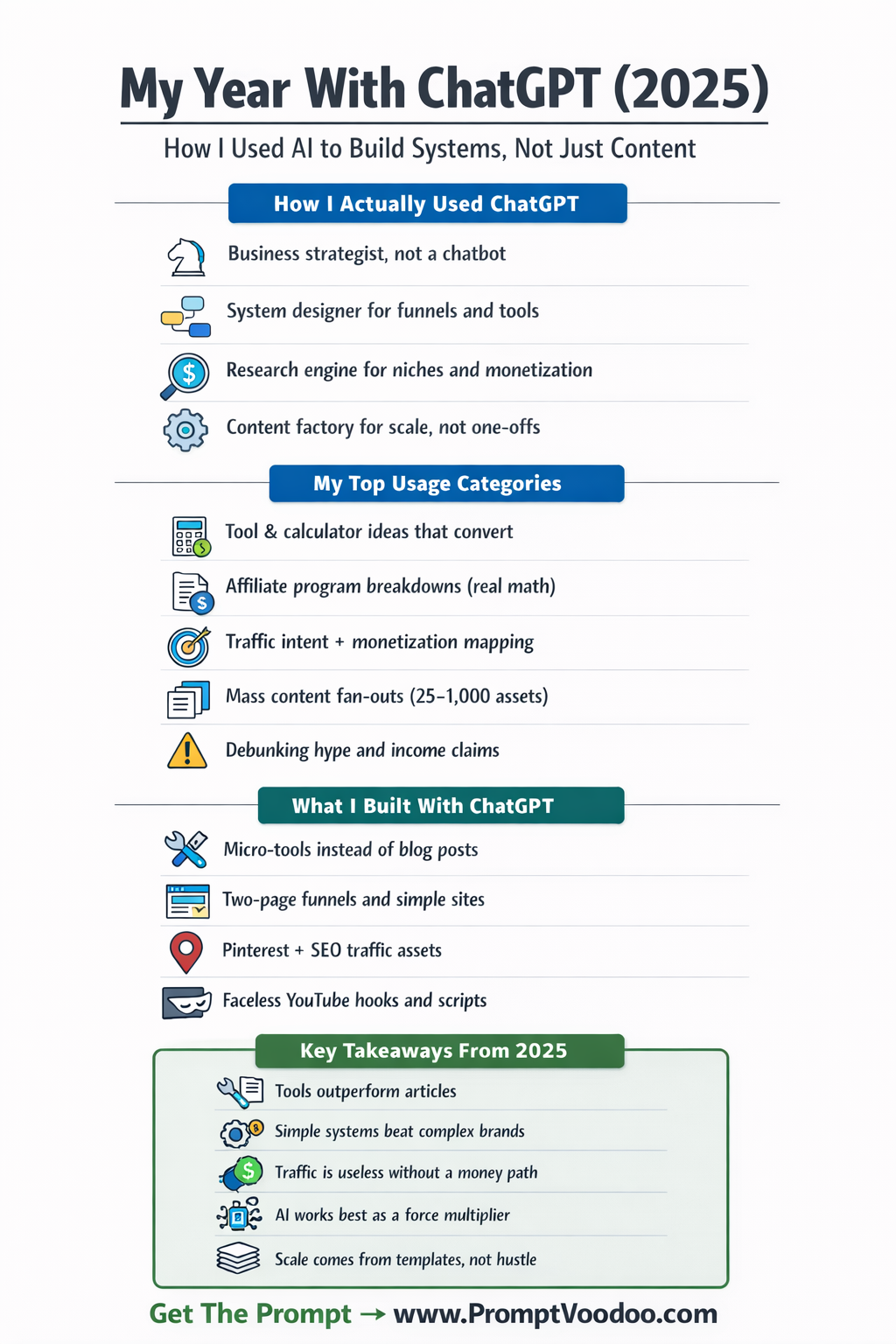
Chatgpt Year End Feature = Money Strategies
Click Here To Join The Challenge
Click Here To Get The Infographic Instructions
Click Here To Join The Challenge
Click Here To Get The Infographic Instructions
Make Money With ChatGPT – Real Talk, No Guru Nonsense!
If you want to make money online with Chat GBT, listen up because ChatGpt just revealed a new feature just a couple days ago that very few people are talking about, but actually reveals the top money-making strategies that you can use starting right now. This new tool is going to show you how to spot the missing puzzle piece to making money online, find the gaps in your thinking, show you some of the ways that you’re not using Chat GBT to its full potential. Hint, this is what stops most people from actually building a real business. It’s also going to show you the blind spots and what you’re missing when it comes to building a business, getting traffic, promoting offers, and more. It’s also going to reveal personally for you. Yep, that’s right. This is a personal tool that looks at how you use Chat GPT in a very specific way. And using that, it’s going to show you how to take your ideas and scale them into full-fledged businesses. Plus, how to move forward in 2026 to get rid of info overload, shiny object syndrome, and all the things that are stopping you from making money online.
Most people think making money with ChatGPT is about typing prompts and hoping magic happens. They jump in, generate content, make random plans, start a project, stop halfway, switch to something new, and wonder why nothing is working. It is not that ChatGPT is weak. It is often that people are using it in a shallow way.
This new feature changes that.
Instead of guessing what to do, this feature actually looks at how you have been using ChatGPT, what you ask it, what you try to build, what you constantly get stuck on, and where you keep repeating the same patterns. It exposes something most people never want to admit. The problem is rarely the tool. The problem is the way we think, the way we plan, and the way we execute.
That is why this tool matters so much.
It is like holding a mirror to your online business habits. It highlights the blind spots you never notice. It shows where you wasted time. It shows where you chased the wrong things. It shows the opportunities you ignored. And once you actually see those patterns, you can finally fix them instead of repeating them.
This is where things start getting exciting.
Because once you understand your behavior, your thinking patterns, and the way you approach business, ChatGPT becomes more than a chatbot. It becomes a planning partner, a system builder, a traffic strategist, and a monetization assistant. It stops being something you “play with” and turns into something you can actually build a business around.
Most people get stuck because of three big problems.
They get overwhelmed.
They get distracted.
They never commit to a real system.
So they bounce between hustles.
They jump between ideas.
They watch endless making money videos.
They collect information but never build anything.
This feature aims to break that cycle.
It helps you see what actually matters.
It shows what to stop doing.
It shows what to double down on.
It shows how to take ideas and push them into real systems instead of random experiments.
And yes, it still connects to traffic, offers, content, and monetization. But it does it in a way that is personal to you, based on how you already think and behave.
That is what makes it powerful.
It is not just another feature.
It is not another shiny distraction.
It is something that helps you finally get clarity.
And when you have clarity, you have focus.
When you have focus, you have direction.
And when you have direction, you can finally start building something that makes sense.
That is where real money starts.
ChatGPT “Your Year With ChatGPT” – How This Works
Click Here To Join The Challenge
Click Here To Get The Infographic Instructions
This feature works by helping you understand yourself, your habits, and how you actually use ChatGPT instead of how you think you use it.
Here is the simple breakdown of how it helps.
- It looks at your usage patterns
• It identifies what you spend time on
• It shows where you get stuck or distracted
• It highlights what you keep trying but never finish
• It reveals missed opportunities and smarter directions
• It helps turn ideas into structured business plans
• It helps align your thinking with what actually makes money
Think of it like a personal audit of your online business brain. It does not just give you tips. It gives you insight. And that insight helps you stop wasting time, stop chasing nonsense, and finally start moving toward building something real and profitable.
Use “Year in Review” as a Behavior Audit (Not a Highlight Reel)
Most people hear “Year in Review” and instantly think of feel-good summaries. Wins only. Success montages. The pretty stuff. But if you truly want to make money online, that mindset destroys you.
Instead of treating it like a trophy wall, treat it like a behavior audit.
This is not about celebrating what you did right.
This is about honestly seeing where your thinking, your habits, and your actions did not line up with actually making money.
A highlight reel tells you,
“Good job. Keep going.”
A behavior audit tells you,
“Here is where your brain tripped you. Fix this or you’ll repeat it next year.”
That is where the real growth happens.
A true behavior audit helps you answer questions like:
- What did you really spend time doing
• What did you start but never finish
• What did you research endlessly but never monetize
• Where did you bounce from idea to idea
• Where did you chase hype instead of strategy
• Where did you build assets versus where you just played around
• What patterns repeated over and over again
Most people do not need new business opportunities.
They need to stop repeating mental loops that keep destroying their progress.
When you look back honestly, you begin to see your true behavior patterns, not the story you tell yourself.
You begin to see things like:
- The months you said you were “working hard” but actually just consumed content
• The weeks you said you were “planning a business” but never launched anything
• The days you said you were “learning” but never applied
• The amount of time you spent asking questions instead of executing
That honesty stings.
But that sting is what wakes you up.
Think of this as a traffic and money X-ray of your mindset.
You’re not asking:
“Did I feel productive?”
You’re asking:
“Did what I did move me closer to traffic, offers, revenue, systems, or growth?”
If something did not move you toward those things, it was noise. No matter how “busy” it felt.
A behavior audit is about alignment.
Aligning your actions with outcomes.
Aligning your thinking with business reality.
Aligning your time with revenue potential.
Once you see your real behavioral truth, the next sections become much easier.
Categorize Your Prompts Into “Money vs Noise”
Click Here To Join The Challenge
Click Here To Get The Infographic Instructions
This is one of the most powerful exercises.
Most people think they are “working” inside ChatGPT.
But when you actually look at the types of questions and requests they’ve made over time… most of it never had a financial direction.
It was curiosity.
Randomness.
Entertainment.
Idea-hunting without monetization.
Busy activity masked as productivity.
To fix that, you separate your past use into two buckets:
Money Prompts and Noise Prompts
Money Prompts are prompts that clearly connect to:
- Traffic
• Offers
• Audience building
• Lead capture
• Conversions
• Systems
• Revenue models
• Business mechanics
• Execution steps
• Real assets
Noise Prompts are everything that feels productive but never goes anywhere.
Things like:
- Endless brainstorming with no deadline
• Playing with tools instead of building
• Asking hypothetical business questions
• Starting ideas you never launch
• General curiosity with no execution
• “Someday” projects
• Non-monetized learning loops
Here is a simple comparison.
Money vs Noise Prompt Table
| Type | What It Looks Like | Real Outcome Potential |
| Money Prompt | “Help me build a traffic funnel for X niche and map each step” | Direct revenue path |
| Noise Prompt | “Give me 50 business ideas I could maybe try someday” | No commitment or direction |
| Money Prompt | “Create a content system that attracts buyers, not viewers” | Leads and conversions |
| Noise Prompt | “Write 100 random blog topics for inspiration” | Feels productive, rarely used |
| Money Prompt | “Help me build an offer stack, pricing model, and value ladder” | Monetization engine |
| Noise Prompt | “What are some cool ways people make money online” | Passive curiosity |
| Money Prompt | “Turn this idea into a launch plan with deadlines and assets” | Execution |
| Noise Prompt | “What niche do you think is profitable this year” | Indecision fuel |
When you see how many of your prompts were actually noise, you realize something powerful:
It is not that ChatGPT “didn’t work for you.”
It is that your questions never pointed toward money in the first place.
Good questions create powerful systems.
Weak questions create endless distraction.
So now you intentionally shift your thinking.
From:
“What can I play with?”
To:
“What can I build, launch, monetize, track, and scale?”
That shift alone changes everything.
Identify Where You Got Stuck (This Is Real Gold)
This is one of the most important discoveries.
Where you got stuck is not a weakness.
It is a diagnosis.
Most people run into friction and assume:
“I guess I’m not cut out for this.”
But the place where you keep getting stuck is your highest-value repair point. If you fix the stuck point, your income potential explodes.
People usually get stuck in one of these core areas:
- Overthinking instead of starting
• Starting fast but never finishing
• Building but never launching
• Launching but never promoting
• Getting traffic but never monetizing
• Getting offers but never building systems
• Building systems but never tracking
• Constantly restarting instead of iterating
Your stuck point is not random.
It is a pattern.
It repeats.
It follows you year after year unless you finally confront it.
Here are common “stuck zones” and what they usually mean.
Common Stuck Zones and What They Reveal
| Where You Get Stuck | What It Usually Means | What Needs To Happen |
| You never pick a niche | Fear of commitment, perfectionism | Decide, commit, accept learning curve |
| You pick ideas but never build | You like possibility, hate responsibility | Build something imperfect and ship |
| You build but never launch | Fear of judgment | Launch anyway, feedback is your teacher |
| You launch but never promote | Fear of selling | Learn traffic psychology, marketing mindset |
| You get traffic but no sales | Wrong audience or weak offer | Align traffic with buying intent |
| You make sales but can’t scale | No systems or repeatable process | Turn results into frameworks |
| You stop when bored | Shiny object addiction | Discipline > dopamine |
Your stuck point tells you exactly:
- Where your mindset collapses
• Where discipline disappears
• Where fear sneaks in
• Where excuses come alive
• Where your belief system limits your income
Instead of avoiding these places, this is where you lean in hardest.
Because once you repair the stuck zone, something incredible happens.
Momentum finally sticks.
Effort finally compounds.
Ideas finally become businesses.
Traffic finally leads to systems.
Systems finally lead to money.
Most people are not failing everywhere.
They are failing in one consistent bottleneck.
Fix the bottleneck and the entire machine changes.
Extract Your Personal “Failure Signature”
Click Here To Join The Challenge
Click Here To Get The Infographic Instructions
Everyone has a unique failure pattern.
A “failure signature.”
It is the repeated mix of:
- Behaviors
• Emotions
• Limitations
• Reactions
• Excuses
• Loops
That show up every time things get serious.
You can literally watch it happen again and again across different projects, businesses, and ideas. Different topics. Same collapse pattern.
Your failure signature may look like:
- Big motivation burst
• Massive content binge
• Endless planning
• Overbuild instead of launch
• Lose steam
• Jump to new idea
• Repeat cycle
Or maybe:
- Fast launch
• No strategy
• Random actions
• No tracking
• Poor results
• Discouragement
• Walk away
• Repeat cycle
Or even:
- Learn everything first
• Refuse to start until “ready”
• Never feel ready
• Keep collecting info
• Years pass
• Still thinking instead of earning
When you extract your failure signature, you stop telling emotional stories like:
“I just need the right idea.”
“I guess I’m unlucky.”
“Other people just have advantages.”
“It’s just not working.”
You start telling the truth:
“I keep repeating the same behavioral pattern and blaming external factors.”
That honesty is power.
Here is a simple framework to identify your personal failure signature.
Failure Signature Discovery Checklist
- Do you always quit at the same stage
• Do you always fear the same point in the process
• Do you overbuild or overthink
• Do you stall when it is time to sell
• Do you panic when it is time to scale
• Do you stop when effort doesn’t instantly reward you
• Do you crave new ideas when old ones require discipline
Once you have your signature, you do something most people never do.
You build systems that block your failure pattern.
If your signature is quitting when bored,
you build accountability.
If your signature is never launching,
you force deadlines and public commitment.
If your signature is not selling,
you create simple sell-first frameworks.
If your signature is chaos,
you build structure.
If your signature is endlessly restarting,
you forbid yourself from new projects until something is finished and monetized.
You stop trusting “motivation.”
You start trusting systems.
That is when ChatGPT becomes dangerous in the best way.
Not as a toy.
As a partner that helps you:
- engineer execution
• build structured plans
• create monetized frameworks
• map traffic to offers
• remove thinking friction
• and reinforce discipline
Once you know your behavior, your noise patterns, your stuck zones, and your failure signature, you no longer use ChatGPT randomly.
You use it strategically.
Intentionally.
Profit-driven.
Focused.
And that is where things finally change.
Rebuild Next Year Around Profit Loops, Not Tasks
Click Here To Join The Challenge
Click Here To Get The Infographic Instructions
Most people plan their next year wrong.
They build giant to do lists.
They write endless goals.
They create productivity boards.
They convince themselves that if they stay “busy” they will somehow become profitable.
But tasks do not create income.
Profit loops do.
A profit loop is a repeatable cycle where effort continues to pay you, instead of requiring brand new effort every single time.
A task ends when you finish it.
A profit loop keeps working after you build it.
Here is the difference.
A task looks like this:
- Write a post
• Record a video
• Make a lead magnet
• Build a landing page
• Brainstorm a niche
It is a one time motion.
A profit loop looks like this:
- Build content that attracts buyers consistently
• Capture leads you can email again and again
• Send those leads to offers that convert
• Track behavior so you can improve conversions
• Turn successful pieces into repeatable systems
That is a loop.
You want your next year to revolve around loops like:
- Content to traffic to leads to sales
• Search intent to useful solution to monetization
• Problem solving to authority to brand trust to conversions
• System building to automation to scale
If what you are doing does not plug into a loop, it is probably noise.
This is the mindset shift.
From:
“What can I do this month?”
To:
“What can I build that keeps working this year and beyond?”
Once you think in loops, everything gets easier.
You stop chasing random new ideas.
You stop burning energy on one shot activities.
You stop restarting all the time.
You start stacking systems.
You start compounding output.
You start letting assets carry the workload.
This is how real online businesses grow.
Next year should feel less chaotic and more structured.
Less about sprinting.
More about stacking.
Less hustle.
More leverage.
And ChatGPT becomes incredibly powerful inside profit loops when you use it correctly.
That brings us to the next part.
How To Use ChatGPT Next Year (Profit Mode)
Most people use ChatGPT like a playground.
They ask random questions.
They bounce around different ideas.
They use it when they feel stuck, bored, or curious.
Profit mode is different.
Profit mode treats ChatGPT as:
- a strategy engine
• a marketing assistant
• a traffic architect
• a monetization planner
• a system builder
Not a toy.
Not a distraction.
A tool for execution.
Profit mode means you use ChatGPT for things that drive money direction, not just creative stimulation.
Here is how that looks in practice.
Use ChatGPT to:
- Design your traffic funnels
• Map out email sequences
• Build offers and pricing structure
• Outline content built for buying intent
• Create frameworks and templates
• Turn behavior insights into business plans
• Move you from idea to build to launch to monetize
Do not just ask general questions.
Ask specific, directional, action based questions.
Do not just brainstorm.
Engineer outcomes.
Here is a useful way to think about it.
ChatGPT Profit Mode Table
| Wrong Way To Use It | Better Profit Mode Use |
| “Give me 50 random business ideas” | “Help me build a monetization plan around the best performing idea I already tested” |
| “Write a blog post about my topic” | “Create a content system designed to attract buyers, not just readers” |
| “What are some trending niches” | “Analyze what I worked on and identify the highest leverage opportunity” |
| “Help me make money online” | “Build a step by step funnel that turns traffic into revenue in my niche” |
| “How do people get traffic” | “Create a realistic traffic plan matched to my strengths” |
Profit mode means you do fewer random things.
And you do more intentional things.
You reduce friction.
You stop thinking in circles.
You let ChatGPT carry heavy planning work so you can focus on doing.
When you combine this with profit loops, you are no longer chasing money.
You are building engines that move you toward it.
Now it is time to introduce something extremely powerful.
The 3 Core Prompts That Change Everything
Click Here To Join The Challenge
Click Here To Get The Infographic Instructions
These three prompts are simple.
But they are ruthless.
Honest.
Direct.
And incredibly revealing.
They force clarity.
They remove lies you tell yourself.
They expose where real money was hiding.
They reveal where you sabotaged progress.
Use them on a monthly review.
Use them on your past work.
Use them anytime you feel confused.
Use them when you feel stuck.
These prompts are not for entertainment.
They are for transformation.
Prompt 1: Reality Check
“based on everything I worked on this month, what should have made money but i didnt and why?”
This question forces truth.
No excuses.
No soft answers.
No fake productivity.
You ask ChatGPT to evaluate your actions and show you:
- what had real monetization potential
• what was strong enough to work
• what could have been profitable
• what stalled
• what failed because of behavior not strategy
This reveals things like:
- You built good content but never built offers
• You had traffic but no lead capture
• You had a great idea but never finished
• You launched but never promoted
• You promoted but never tracked
• You built assets but never created a loop
It shows where the chain broke.
And once you see the break, you fix it.
Momentum returns.
Progress accelerates.
Opportunities reopen.
This is accountability in its most productive form.
Prompt 2: Constraint Prompt
“If I could keep ONE project from this year to make profitable next year, which should it be and why?”
Most people fail because they try to do too much.
Too many ideas.
Too many projects.
Too many half finished builds.
This prompt forces focus.
It asks ChatGPT to help you identify:
- your highest leverage project
• your closest to profitable asset
• the thing most worth saving
• the thing already showing promise
• the thing that could scale if given attention
Then it asks why.
And the why is important.
Because it reveals:
- strengths
• proof of concept
• traction
• alignment
• opportunity
Once you identify that one project, everything else becomes simpler.
You stop splitting your energy.
You stop scattering your time.
You pour effort into the highest return path.
One focused project executed well can outperform ten poorly executed ones.
This is how people finally break through.
Prompt 3: Leverage Prompt
“What I am doing manually that should be automated, templated, or deleted?”
This is where efficiency and scale live.
A lot of people work hard.
But they work hard in small, inefficient ways.
They repeat tasks.
They rebuild things from scratch.
They waste time on actions that produce very little.
This prompt helps ChatGPT identify:
- what you repeat unnecessarily
• what could be automated
• what should become templates
• what should be removed completely
Here is how it usually plays out.
Leverage Identification Table
| Behavior | Reality | Solution |
| Rewriting similar emails each time | You are wasting time | Build templates |
| Manually handling repetitive tasks | Automation exists | Use workflows |
| Creating endless content without purpose | Low leverage | Build strategic content systems |
| Doing things just to feel busy | Emotional comfort | Delete pointless activity |
| Constantly restarting new projects | Lack of discipline | Commit and build structure |
This turns chaos into clarity.
You go from:
“I work a lot but nothing happens.”
To:
“I work on the right things and results actually show up.”
That is leverage.
That is maturity.
That is business thinking.
Final Truth (This Is The Big One)
Here is the truth most people never want to hear.
ChatGPT does not make people successful.
It magnifies who they already are.
If someone lacks focus, ChatGPT will help them become more distracted.
If someone chases shiny objects, ChatGPT will help them chase more.
If someone refuses to finish things, ChatGPT will give them endless new things to start.
But if someone is willing to:
- audit their behavior
• face uncomfortable truths
• separate money from noise
• fix their stuck points
• recognize their failure signature
• build loops instead of tasks
• use AI in profit mode
Then ChatGPT becomes something entirely different.
It becomes leverage.
It becomes structure.
It becomes clarity.
It becomes a force multiplier.
The real shift is not the tool.
It is the person using it.
When you rebuild your next year around profit loops instead of random effort, and when you use these prompts honestly, you stop treating success like luck.
You start treating it like engineering.
You build systems.
You create flows.
You identify what works.
You double down.
You remove what does not.
You grow with intention.
And that is when money finally stops feeling mysterious.
It starts feeling logical.
Set & Forget SaaS Affiliate Income: The “Zero-Work” Strategy (Do THIS First)
SAAS Affiliate Programs Passive Income (If You Do This)
A lot of people wonder if it is actually possible. Can you really build a small website, connect it to the right software as a service programs, and earn recurring income without constantly chasing sales? The simple answer is yes, but only if you understand how this works, set it up correctly, and think long term instead of chasing quick hits.
The beauty of SAAS affiliate programs is that many of them pay recurring monthly commissions. That means instead of getting paid once, you get paid again and again as long as the user stays subscribed. That is where the power really comes in. It is like stacking income instead of constantly starting over.
There is a mindset behind this. It is about building something that grows over time, not something that pays once and disappears. As the famous line goes:
“Compound interest is the most powerful force in the universe.”
That same idea applies here. When your referrals stack, your earnings stack. When your subscribers renew, your income renews. That is how this becomes closer to real passive income.
How To Set Up The Site
You do not need a massive website.
You can start with:
- A helpful homepage that explains the problem you solve
• A page that reviews or explains the tools
• A page that captures leads or helps people get started
Keep it simple. Focus on solving problems, not dumping features. The goal is to attract people already interested in these tools and help them make a smart decision.
Software As A Service Affiliate Programs That Pay Really Well
Some of the best types of programs include:
- Email marketing tools
• Funnel and page builders
• SEO and analytics tools
• Automation software
• Business productivity tools
These pay well because businesses rely on them every month. When people need them, they keep paying.
How To Use AI To Make Content And Tools For Massive Traffic
AI helps you:
- Create helpful content faster
• Build simple tools and resources
• Answer user questions
• Provide value without huge effort
This turns your small site into something useful that attracts real users.
How You Get Paid
It is straightforward.
- Someone signs up through your link
•They subscribe to the software
• They keep using it
• You keep getting paid
You get recurring income instead of one-time payments. That is the real power.
The SaaS Stacking Method
The Money Math (Why We Do This)
The SaaS stacking method is built on a simple idea that most people overlook. You do not need hundreds of sales in one day to make this work. You need small wins that repeat.
Most online income models reset every day. You wake up at zero and have to push again. SaaS stacking works differently. Each signup adds a new layer. Those layers stay.
That is where the money math comes in.
If you promote a product that pays once, you must constantly replace lost momentum. Traffic stops, income stops. But when you promote software that pays monthly, every new customer stacks on top of the last one.
One signup today might pay you ten dollars this month. Next month, that same signup pays again. Multiply that by dozens or hundreds of users and the math changes fast.
This is why recurring commissions matter more than big one time payouts.
You are not chasing spikes. You are building a base.
Here is how the money math usually plays out in real life:
- One person signs up for a tool that pays $20 per month
- You send ten signups over time and now you earn $200 per month
- You keep adding just a few more each week
- Months later, you are getting paid daily even when you are not promoting
This is why time becomes your advantage. The longer you stay in one lane, the more powerful the stack becomes.
Most people quit too early because they look at today’s income instead of next year’s position. SaaS stacking rewards patience and focus, not speed.
Another important part of the money math is conversion ease. Software sells itself better than most products. Businesses already want tools. Freelancers already need systems. Creators already look for efficiency.
You are not convincing people to buy something random. You are helping them do what they already want to do, faster and easier.
That is why this model works across many niches. It is not locked into one industry. Anywhere people use software, there is an opportunity to stack recurring income.
Once you understand this math, the strategy becomes obvious. Build small assets that send targeted traffic. Let the software handle the delivery. Let time handle the growth.
That is SaaS stacking.
The Program (Multi Niche Payers)
One of the biggest strengths of SaaS affiliate income is flexibility. You are not stuck in one market. Software exists everywhere. Marketing, finance, design, productivity, education, ecommerce, health, and even local businesses all rely on tools.
This means you can choose niches based on interest, experience, or pure opportunity.
The key is not promoting everything at once. The key is choosing one niche per site and stacking within that lane.
Below is a detailed table of example SaaS affiliate programs across multiple niches. These are the types of programs that work well with the SaaS stacking method because they solve real problems and often include recurring payouts.
Examples of Multi Niche SaaS Affiliate Programs
| Software Category | Example Tool Type | Who Uses It | Typical Commission | Payout Type | Why It Works |
| SEO & Marketing | Keyword Research Tools | Bloggers, agencies, marketers | 20% to 40% | Monthly recurring | Ongoing need for rankings and traffic |
| SEO & Marketing | Email Marketing Platforms | Businesses, creators | 30% to 50% | Monthly recurring | Email lists require constant management |
| SEO & Marketing | Funnel Builders | Coaches, course creators | 30% to 40% | Monthly recurring | Funnels are core to online sales |
| Content Creation | AI Writing Tools | Writers, marketers | 20% to 50% | Monthly recurring | Content demand never stops |
| Content Creation | Video Creation Software | YouTubers, brands | 25% to 40% | Monthly recurring | Video is expensive without tools |
| Design | Graphic Design Platforms | Designers, small businesses | 20% to 30% | Monthly recurring | Branding is ongoing |
| Productivity | Project Management Tools | Teams, freelancers | 15% to 30% | Monthly recurring | Work organization is essential |
| Productivity | Note Taking Apps | Students, professionals | 20% to 50% | Monthly recurring | Knowledge management grows over time |
| Ecommerce | Store Builders | Online sellers | 20% to 40% | Monthly recurring | Stores stay active |
| Ecommerce | Inventory Management | Retailers | 15% to 30% | Monthly recurring | Operations require software |
| Finance | Accounting Software | Small businesses | 20% to 40% | Monthly recurring | Compliance and tracking are mandatory |
| Finance | Invoice Generators | Freelancers, contractors | 20% to 50% | Monthly recurring | Payments happen every month |
| Education | Course Platforms | Educators | 25% to 40% | Monthly recurring | Courses scale with students |
| Education | Community Platforms | Creators | 20% to 40% | Monthly recurring | Memberships renew |
| Sales | CRM Tools | Sales teams | 15% to 30% | Monthly recurring | Customer tracking is ongoing |
| Sales | Appointment Scheduling | Service businesses | 20% to 40% | Monthly recurring | Bookings never stop |
| AI Tools | Voice Generation Software | Creators, agencies | 20% to 35% | Monthly recurring | AI use increases over time |
| AI Tools | Image Generation Tools | Designers, marketers | 20% to 40% | Monthly recurring | Visual content demand grows |
| Local Business | Industry Specific Software | Plumbers, dentists, agents | 20% to 50% | Monthly recurring | Niche tools convert well |
| Web Tools | Hosting & Domain Services | Website owners | 30% to 60% | Monthly or hybrid | Every site needs hosting |
This table is not about pushing brands. It is about understanding patterns.
Good SaaS programs usually share these traits:
- They solve a painful or repetitive problem
- Users stay subscribed for months or years
- Pricing is reasonable for the value provided
- The product improves productivity or income
- There is constant demand for tutorials and help
This is where AI becomes powerful. You do not need to know every feature. AI can break down what each tool does, who it is for, and what people search before they buy.
For example, instead of targeting a tool name, you can target problems:
- How to create invoices
- How to stop emails going to spam
- How to organize projects
- How to track expenses
- How to generate keywords
Each of these problems maps naturally to software.
You then build small pages or tools that help solve part of that problem. The software becomes the logical next step.
This is why multi niche SaaS stacking works. You are not selling. You are assisting.
When you combine focused niches, recurring payouts, and AI driven content and tools, you are no longer relying on luck. You are building a system that grows layer by layer.
That is the real power behind SaaS stacking.
The Strategy: Sideways Marketing and Trigger Words
Most people fail with affiliate marketing because they go straight at the product. They try to rank for software names, reviews, or “best tool” keywords. That lane is crowded, competitive, and slow. Sideways marketing takes a different path.
Instead of targeting people who already know the software, you target people before they realize they need it.
This is where trigger words come in.
Trigger words are phrases people search when they are experiencing a problem, not when they are shopping for software. These searches happen earlier in the decision process. Competition is lower, intent is high, and trust is easier to earn.
Sideways marketing works because it meets people where they are, not where you want them to be.
Someone searching for “best email software” is already being sold to by everyone. Someone searching for “why my emails go to spam” is looking for help. That is a huge difference.
You are not interrupting. You are assisting.
Here is how sideways marketing actually works in practice:
- Identify a core software you want to promote
- Break down what that software helps people do
- Find the problems people face before they know the tool exists
- Create content or tools that solve a small piece of that problem
- Introduce the software as the natural next step
This approach builds trust faster and converts better over time.
Below are common trigger word angles that work across many SaaS niches.
Examples of Sideways Trigger Words
- How to create invoices
- Invoice templates for freelancers
- Why emails go to spam
- Spam word checker
- How to organize projects
- Simple project tracker
- Evernote alternative
- How to take better notes
- Content calendar template
- Social media posting schedule
- Keyword ideas for small businesses
- Free keyword generator
- How to name a business
- Business name ideas
- ROI calculator
- How much should I charge
- Appointment scheduling template
- Booking form for services
- Client onboarding checklist
- How to track expenses
- Write off calculator
- Domain name ideas
- Brand name generator
Notice what is missing. These are not brand names. They are intent signals.
When someone searches these terms, they are already halfway to needing software. You simply guide them there.
The mistake most people make is switching lanes too early. They write one post, get little traffic, and move on. Sideways marketing only works when you stay in one lane long enough for the stack to build.
Pick one problem. Stay obsessed with it. Go deep.
That is where the compounding happens.
The Tech Edge: Using AI to Build Micro Tools
Basic Tools = Big Traffic
AI changed everything because it removed the biggest barrier in affiliate marketing. You no longer need to be a developer to build tools. You do not need a team. You do not need months of work.
You can now build micro tools.
Micro tools are small, simple utilities that solve one specific problem. They do not replace full software. They lead people to it.
This is the tech edge.
Instead of writing another article, you give people something they can use. Tools attract links, shares, and repeat visits naturally. They also convert better because they create instant value.
Examples of micro tools that work extremely well:
- Invoice generators
- Keyword expansion tools
- Spam word checkers
- Subject line testers
- ROI calculators
- Business name generators
- Content idea generators
- Domain availability checkers
- Pricing calculators
- Checklist builders
These tools do not need to be perfect. They need to be helpful.
AI can build these tools quickly by generating simple code, logic, and layouts. You focus on the idea. AI handles the heavy lifting.
Here is why basic tools drive big traffic:
- People search for tools more than articles
- Tools get bookmarked and reused
- Tools naturally attract backlinks
- Tools position you as helpful, not salesy
- Tools make affiliate links feel earned
A simple three page site works perfectly here:
- Page one explains the problem
- Page two hosts the tool
- Page three presents the deeper solution
This is how you turn AI into leverage instead of noise.
You are not competing with massive blogs. You are building small assets that do one thing well.
When you combine sideways marketing with AI powered micro tools, you stop chasing traffic. Traffic starts finding you.
That is the real tech edge.
Traffic Methods (No Paid Ads)
One of the best parts about this model is that it does not rely on paid ads. You are not risking money upfront or trying to outbid bigger companies. The traffic comes from being useful and consistent.
When you build sideways content and micro tools, traffic becomes a result of value, not spending.
This approach focuses on intent based traffic. These are people already searching for help. You are simply placing the right solution in front of them.
Here are the main traffic methods that work well without ads:
- Search traffic from problem based keywords
- Tool based traffic from people actively looking for calculators, generators, and templates
- Comparison traffic such as alternatives and versus searches
- Evergreen how to content that stays relevant for years
- Community driven traffic from forums and Q and A platforms
- Short form videos that demonstrate tools and results
Search traffic is the foundation. When someone types a question into a search engine, they are raising their hand. Content built around trigger words captures that moment.
Tools amplify this effect. A simple tool can rank on its own. It can also support multiple pages of content around it. People search for tools more often than opinions. When they find one that works, they stay longer and trust faster.
Video adds another layer. You do not need fancy production. Simple screen recordings showing how to solve a problem or use a tool work extremely well. These videos can send traffic back to your site without selling.
Forums and communities are often overlooked. People ask the same questions every day. When you answer honestly and point them to something useful, traffic comes naturally. This works especially well for niches like freelancing, small business, and creators.
The key with traffic is patience. You are planting seeds, not flipping switches. Each page, each tool, each answer adds another path back to your site.
Over time, these paths stack.
Next Steps for the Viewer
At this point, the path forward should feel clearer and simpler than most online income advice.
You do not need to do everything at once. You just need to do the right things in the right order.
Here are practical next steps you can take:
- Pick one software category you understand or want to learn
- Choose one main problem that software solves
- Find trigger words related to that problem
- Decide on one simple micro tool to build
- Set up a basic three page website
- Create one piece of helpful content per week
- Stay in the same lane for at least several months
Do not chase trends. Do not jump niches. Focus beats speed every time.
Treat this like a small business, not a side hustle lottery. Small actions done consistently matter more than big bursts of effort.
If you commit to helping one type of person solve one type of problem, the rest starts to line up.
Conclusion
Making passive income with SaaS affiliate programs is not about luck, secrets, or shortcuts. It is about structure, focus, and time.
The reason most people fail is simple. They try to do too much, too fast, with no system behind it. This model works because it narrows your attention and compounds your effort.
A simple website. One problem. One solution. One stack at a time.
Recurring software commissions turn effort into leverage. Sideways marketing keeps competition low. AI powered micro tools create value fast. Organic traffic builds trust instead of burning cash.
None of this happens overnight. But it does happen if you stay consistent.
Every signup is a brick. Every tool is a doorway. Every piece of content is another chance to help someone.
When you stop chasing quick money and start building assets, income stops resetting to zero. It starts stacking.
That is the real opportunity here.
The REAL Way To Make Money With Amazon Affiliates (Zero Cost Strategies Revealed)
Amazon Affiliate Program – Make Money From Home- Real Strategies
When people first hear about the Amazon affiliate program, the hype usually sounds unbelievable. You see bold claims everywhere like working from home, posting a few links, and suddenly earning $3,500 a week. It sounds easy. It sounds instant. It sounds like the perfect shortcut to quick money.
But it does not work like that in the real world. What actually happens is most people jump in, expect overnight results, and then quit because they never really understood how this business works from the start. That is why it is important to cut past the noise and see what really happens when you try to earn with Amazon as an affiliate.
Before anything else, there needs to be a clear reality check. A lot of people trying to make money online do not make anything at all. In fact, as stated clearly:
“The average vast majority of people trying to make money online make zero. Most people make nothing.”
That is a hard truth, but it matters. Not to scare anyone away, but to set expectations the right way. Because if someone starts believing it is automatic, passive, and instant, they are already on the wrong path.
The Amazon affiliate program is not a guaranteed paycheck. Amazon is not sitting there waiting to hand out free money. It is a business model that only rewards people who understand traffic, trust, content, strategy, and effort. There is no magic social media post that turns into automatic sales. There is no one button that prints cash. There is only learning how things really work and building something the right way over time.
Understanding why people fail. Understanding why others succeed. Seeing real numbers. Seeing what kind of traffic is actually needed. Seeing how people make mistakes like depending only on social media posts or never thinking about strategy. When you treat it like a business, you think differently, and that is where the real learning begins.
This is not about flashy claims. It is not about promising guaranteed income. It is about understanding what Amazon’s affiliate program actually is, how it really works, and why it can still help you make money if you know how to use it correctly. And to fully appreciate what is coming next, it is important to remember this line that sets the tone perfectly:
“If you think you know where I am going with this, you do not.”
What Is Amazon Affiliate Marketing?
Amazon affiliate marketing, also known as Amazon Associates, is a program where you recommend Amazon products and earn a small percentage when people buy through your link. That means you do not need to create your own product. You do not need to handle shipping. You do not need to deal with customer support. You simply connect buyers to Amazon and earn from the purchases they make.
It sounds simple, but like everything else, there is more beneath the surface.
Amazon is known for being a low commission but high trust, high conversion platform. People already know Amazon. They already buy from it. They already have accounts. They trust the checkout process. And that matters because when people trust where they are buying, they tend to purchase easier and faster compared to random unknown sites. That strong trust factor is one of the biggest strengths of the program.
Amazon also has strong conversion capability. Many times, traffic that would not convert somewhere else converts on Amazon because of convenience, trust, and habit. People browse, compare, and often end up adding more items to their cart than originally planned. And yes, as an affiliate, you can even get paid on additional qualifying products they purchase along with the main item they clicked from your link.
And again, just to remind anyone who thinks they already know the ending of this story:
“If you think where I’m going with this… you don’t.”
What the Amazon Affiliate Program Really Is
The Amazon affiliate program is often misunderstood because people see it as a shortcut to fast income. They hear bold claims like posting a few links and suddenly earning big money. In reality, the Amazon affiliate program is something very different.
It is a low commission, high trust, massive catalog conversion machine. That means you do not get paid a lot per sale, but you get access to something priceless. You get to leverage Amazon’s trust, brand power, and incredibly strong ability to convert people into buyers.
People already buy from Amazon every day. Most people already have accounts. Many already have items sitting inside their cart. Some even buy just because it is convenient. So when someone clicks an affiliate link and lands on Amazon, they are not entering a strange or risky website. They are entering a place they already trust and already use. That is a huge advantage.
So instead of viewing the Amazon affiliate program as a money printer, it is better to see it as:
- A trusted platform that makes people feel safe buying
• A huge marketplace filled with buyer intent
• A conversion engine that often sells better than unknown sites
• A tool that unlocks traffic opportunities you normally could never touch
That is what the Amazon affiliate program really is. And when you see it that way, you start to understand how to actually use it correctly.
The Affiliate Marketing Dude Rule
There is an important mindset shift that changes how you see Amazon affiliate marketing. Instead of chasing hype or copying what fake experts say online, the rule is simple. Treat this like a real business. Look at real numbers. Look at traffic. Look at how things really convert. Build instead of guessing.
Most people listening to online advice fall into scams, repetitive lies, or big promises that never happen. That is why one of the strongest messages here is this commitment to honesty, no gatekeeping, and showing what actually works, not fantasy shortcuts.
The idea is to stop thinking like someone hoping to get lucky and start thinking like someone building something real. Ask smarter questions.
Like:
- Where does the traffic really come from
•What niche actually has demand
• What do people really search for
• How can you build authority instead of spamming links
• What are real conversion numbers instead of hype
When you look at Amazon affiliate marketing with this mindset, things get clearer. You stop believing that posting a few social media links will suddenly change your life. You start seeing why strategy matters. You start realizing why it is about learning, testing, tracking, and improving like a real business owner would.
That is the real winning rule. Understand how it works. Treat it seriously. Think smarter. And stop believing overnight success stories.
Why Low Commissions Do Not Matter
One of the first complaints people have about Amazon is the low payout. They see 1 percent to 10 percent and think it is automatically useless. But that thinking misses the real strength of the program.
Low commissions are not the problem when you understand what Amazon gives you in return. Amazon pays less per sale, but it gives you:
- Massive trust that makes people comfortable buying
•Very high conversion rates compared to many other sites
• Millions of products that attract millions of searchers
• The ability to rank, get traffic, and get clicks easier
• The chance to earn on entire shopping carts, not just one product
Amazon even turns cold traffic into warm buyers. People arrive curious and leave as customers because Amazon knows how to sell. That kind of selling power is worth more than a few extra percentage points somewhere else.
There is another important advantage. Amazon helps you collect data and understand buyer behavior. Once you start seeing what people actually click, what they prefer, and what sells consistently, you gain something incredibly valuable. You gain insight. That insight can later help you move into higher paying offers, better products, or even your own offers.
So low commissions do not matter when the platform gives you traffic, trust, easier ranking, and market understanding. That is the real benefit.
The Model Everyone Gets Wrong
Here is where most people fail. They do Amazon affiliate marketing completely wrong. They think it is about posting links and hoping someone clicks. They think it is about showing random products and waiting for magic results. That lazy approach is why most people quit.
Most people do this wrong because they:
- Focus only on quick money
• Depend only on social media posts
• Never build a real niche or authority
• Do not think about traffic strategy
• Never treat it like a real business
They believe Amazon alone is supposed to make them rich. But that was never the real strategy.
The real approach is very different. You use Amazon not as the ending, but as the starting point. You treat it as a front door to attract traffic, build authority, get visitors, and then grow something bigger. You build content. You capture attention. You guide buyers. You build something that lasts and can flip into better earning opportunities later.
That is why people who do it right think long term. They do not just throw links and hope. They build smart. They plan. They understand real numbers. They stay consistent.
That is the difference between people who fail and people who actually succeed.
How the Amazon Affiliate Program Pays
Amazon pays affiliates based on commissions from qualifying purchases that customers make after clicking an affiliate link. It is simple in structure, but many people misunderstand it because they only hear hype and not how it truly works.
Amazon does not pay the same percentage for everything. Different product categories pay different rates. There is also a time limit, commonly called a cookie window. This matters a lot because people think they will get paid forever after someone clicks. That is not true.
Below is a simplified and clear breakdown of how payment typically works.
Amazon Affiliate Payment Breakdown Table
| Payment Factor | What It Means | Key Details |
| Commission Type | Percentage of the price customers pay | You earn based on completed purchases |
| Commission Range | Around 1% to 10% depending on product category | Luxury and special items usually higher |
| Conversion Power | Amazon converts better than many sites | Often 7% to 10% depending on traffic behavior |
| Cookie Duration | Short window to earn after click | If they buy outside the window, no commission |
| Shopping Cart Advantage | You get paid on qualifying items in the entire cart | Even if they add something else and buy |
| Traffic Requirement | You need real traffic to earn | No traffic means no sales |
| Policy Requirement | Proper disclosure required | Not disclosing can cause trouble |
| Payment Timing | Paid after order is processed | Not instant money |
So while payouts seem low, understanding these mechanics is important. What makes the program valuable is not the percentage alone, but the trust, the massive catalog, and how well Amazon turns visitors into buyers. That is where the real power sits.
Amazon Affiliate Traffic Secret
Here is the truth. Most people fail because they think traffic magically appears. They believe a few links on social media will suddenly explode. Then they get disappointed when nothing happens. The real secret is using Amazon as a powerful door opener to traffic that would normally be hard to reach.
Amazon allows you to talk about tools, parts, accessories, reviews, comparisons, fixes, household solutions, and niche products people are already searching for. When people look those things up, that creates opportunities. Amazon helps you tap into that intent.
Instead of focusing only on commission, you focus first on traffic, trust, and getting people to your platform. Then you move smarter.
That is the traffic secret.
The Smart Amazon Model (Step by Step)
This is what separates people who fail from people who finally start seeing results. Instead of hoping, you follow a real method.
Here is the simplified version of the smart model, step by step.
- Enter a specific niche: Pick a real niche like home tools, security products, pet care, automotive tools, gadgets, smart home devices, or problem solving products. Focus. Do not scatter.
- Create content that answers real buyer questions: Reviews, comparisons, guides, problems, fixes, best lists, how to use, which one to buy, and product breakdowns. People search for these constantly.
- Use Amazon to capture buyer intent: Amazon already has trust. People feel safe clicking and browsing. Let that trust work in your favor.
- Get the traffic
SEO traffic from Google.
Social platform visibility.
Content that ranks.
People who are already searching for these products.
- Build authority around the niche: Become “the person” for that topic. The security camera guy. The dog product guy. The car diagnostic tool guy. Consistency creates authority.
- Capture leads and attention
Email list.
Website visitors.
Returning audience.
Something you own beyond a link.
- Flip the model: Amazon is not the end. It is the first stage. Once you know what people buy, what they like, and what works, you push them to higher paying offers, services, leads, sponsorships, or premium products.
- Scale what works
Improve pages.
Increase traffic.
Test better offers.
Build long-term income instead of gambling on luck.
This is how you do it like a real business, not a guessing game.
Flip Model Examples
This is one of the most powerful parts of the strategy. Instead of only relying on Amazon’s small commissions, you pair Amazon traffic with high paying offers, services, calls, leads, subscriptions, or premium programs.
People search Amazon-type products.
They land on your content.
You first help them.
Then you move them into something that pays much better.
Below is a long table showing how this works.
Flip Model Example Table
| Niche | Amazon Product Type | Why People Search | Flip To | Why This Pays More |
| Plumbing | Tools, snakes, leak detectors | Trying to fix problem | Plumber leads / service calls | High paid leads |
| Home Security | Cameras, devices | Wants safety and surveillance | Full security system offers | Can pay hundreds |
| Electrical | Basic tools and testers | DIY curiosity | Electrician service offers | Higher payouts |
| HVAC | Filters, parts, mini tools | Comfort and repair | HVAC repair leads | Big ticket service |
| Mold & Water Damage | Mold cleaners, testing products | Fixing damage | Professional remediation leads | Pays extremely well |
| Garage | Smart garage tools | Upgrade or repair | Garage repair services | Strong payout value |
| Cleaning & Household | Cleaning equipment | Home maintenance | High paying product leads | Better than small commissions |
| Automotive | OBD scanners, tools | Fixing car problems | Car warranty or car leads | Large commission programs |
| Pest Control | Ant killers, pest devices | Removing pests | Pest control services | Big recurring payouts |
| Fire Safety | Fire tools, protective items | Safety concern | Security or insurance offers | Higher earnings |
| Smart Home | Smart locks, smart hubs | home tech upgrade | Home security plans | Big payouts |
| Rental / Property | Property tools | Managing property | Property systems or software | Higher program rates |
| Pool Products | Pool tools / maintenance | Fixing pool | Pool service leads | Strong niche money |
| Router & Internet Gear | Routers, extenders | Faster internet | Internet or fiber offers | Huge payouts |
| Bed & Sleep | Mattresses, sleep tools | Better sleep | High paying mattress offers | Much higher than Amazon |
| Pet Products | Harnesses, dog products | Caring for pets | Pet insurance | Long term earning potential |
| Travel Gear | Travel tools | Travel lifestyle | Travel cards | Very high commissions |
| Safety Gear | Personal alarms | Protection needs | Safety product offers | Higher worth |
| Learning & Productivity | Planners, books | Improvement | Courses and software | Better payments |
| Dash Cameras | Car cameras | Safety and recording | Insurance offers | Big commission programs |
This is how Amazon becomes the front door instead of the final destination. You use it as leverage, not the only source of income. That is how real affiliates think.
Why Amazon Is Perfect For SEO And Pinterest
Amazon is practically made for SEO and Pinterest strategy because Amazon is tied to products, tools, solutions, and real buyer searches.
People search product names.
People search product problems.
People search comparisons.
People search how to fix things.
People search “best” lists.
That means:
- Perfect for ranking content
• Perfect for product explanations
• Perfect for how-to guides
• Perfect for list posts
• Perfect for comparisons
Google loves useful product content when it is done right. Many of the niches discussed are filled with search traffic every month. That makes Amazon an amazing match for SEO.
Pinterest also loves product content. People go there for ideas, shopping inspiration, home upgrades, gadgets, problem fixes, and lifestyle improvements. Visuals work great there. Products perform well. Amazon-related content fits naturally into that world.
Pinterest users:
- Browse ideas
• Save useful things
• Click on helpful content
• Often buy later
• Love problem solving images
Combine that with Amazon’s trust and conversion power and you suddenly have a system that works together beautifully.
That is why Amazon works perfectly with SEO and Pinterest. They support each other. They match each other’s strengths. They create steady traffic instead of gambling on luck.
The Truth About “Amazon Pays Me $3500 A Week”
You have probably seen those loud claims online. People saying they make $3,500 a week from Amazon. Some even louder ones say they do it with barely any effort. Just a few links. A few clicks. Then they sit back like money magically appears.
Here is the real truth.
Most of those claims are exaggerated. Many are misleading. The average majority of people trying to make money online make nothing at all. That is not negativity. That is reality. And it is important to say it because believing hype is the fastest way to get frustrated and quit.
Amazon does not just hand out big weekly payouts to anyone who signs up. It is not a slot machine. It is not instant wealth. It is a business tool. Used wrong, it pays nothing. Used right, it becomes an incredible asset.
The number one problem is expectations. People expect:
- Fast money
• Easy success
• Big weekly payouts
• Guaranteed income
Instead, what really happens for most people is:
- They sign up
•They post a few links
• They get no traffic
• They get discouraged
• They quit
The people who actually do make good money with it are not doing random posts. They build something. They understand traffic. They study what people want. They track results. They move smarter.
So when someone says they make $3,500 a week, the better question is not “wow how do I get that instantly” but instead:
- How much traffic are they getting
•What niche are they in
• How many clicks turn into buyers
• What strategy are they using
• What is happening behind the scenes
That is how you see the truth behind the claim.
Marcus’s Market Flipper Method
This is where things get smarter. Instead of thinking of Amazon only as a way to make small commissions, think of it like a gateway. A traffic unlock. A door that leads to bigger opportunities.
That is what this method focuses on.
The idea is simple. Use Amazon to attract people who are already in a buying mindset. Then take that same audience and connect them to something that pays more.
Here is the core concept in simple form.
- Find a niche where people already search for products
• Create helpful content around those products
• Use Amazon to gain trust and clicks
• See what people actually buy and want
• Then flip that same traffic to higher paying offers
It is called flipping the market because you are not stopping at the small commission. You are turning Amazon visitors into something bigger. You are upgrading the earning potential.
To make that even clearer, here is how the thinking works.
Market Flipper Concept Table
| Step | What Happens | Why It Matters |
| Traffic comes in | People search for solutions or products | These are real buyers |
| They click your content | You help them and guide them | Trust starts forming |
| They go to Amazon | Amazon converts like crazy | You make small commission |
| You track behavior | You see what people really want | Real market data |
| You introduce better options | Higher paying offers or services | Bigger earnings |
| You build a brand | People return to you for more | Long term income |
This method is powerful because it uses Amazon for what it does best. Trust. Traffic. Conversion. Then it extends beyond that instead of stopping short.
The Affiliate Marketing Dude Verdict
So what is the honest verdict on Amazon affiliate marketing when you remove hype and excuses?
It works.
But only when you understand it the right way.
It works because:
- People trust Amazon
• Amazon converts extremely well
• There are millions of products
• People search for these products every day
• You can get a huge amount of data on buyer behavior
It does not work when people:
- Expect instant rich results
• Post links without strategy
• Do not treat it like a business
• Ignore traffic
• Give up too early
Amazon is best seen not as a final income machine, but as a serious tool. Something that gives you leverage. Something that opens doors to opportunities you normally would not have.
It helps you reach niches.
It helps you attract real buyers.
It helps you earn while learning.
It helps you see what actually sells.
And once you have that, you are in a strong position.
The Right Way To Think About Amazon
A lot of people think the wrong way about this program. They think it is the main money maker. They think every click should mean big cash. They believe Amazon alone should change their life.
The right mindset is completely different.
Think of Amazon as:
- A data source
• A trust builder
• A conversion engine
• A traffic attractor
• A stepping stone
When you think like this, you start planning better.
You begin asking smarter questions.
Like:
- What niches actually get traffic
•What products do buyers consistently look for
• What problems are people desperate to solve
• What pages get clicks
• What audience behavior keeps repeating
This turns Amazon from a small commission program into a learning tool that helps build something much bigger.
If you look at it only for tiny percentages, it feels weak. If you see it as part of a bigger system, it becomes extremely powerful.
Final Reality Check – Marcus Style
Now here is the straight, honest reality check.
Most people will fail with Amazon if they:
- Refuse to learn
• Want shortcuts
• Are impatient
• Do nothing consistent
• Expect miracles
But people who treat it like a business can use it to build something real. Something profitable. Something that grows beyond tiny commissions.
Because the biggest lesson is this powerful idea:
“Amazon is not the paycheck- Amazon is the proof of intent”
That line matters a lot. Amazon shows what people are willing to spend money on. It shows what they are thinking about. It shows what they are buying. It shows their intent.
Intent is everything in marketing.
When you know what people want, you can:
- Serve them better
• Create more relevant content
• Offer better solutions
• Introduce better paying opportunities
• Build long lasting brands
So the final reality check is simple.
Amazon is not the finish line.
Amazon is the gateway.
Amazon is the signal.
Amazon shows demand.
Amazon reveals buyers.
Use it smart.
Use it strategically.
Use it to learn.
Then build something much bigger on top of it.
That is the real winning approach.
Ai Prompt For Creating Digital Products
250 CUSTOM Affiliate Program Prompts Added To Personality Prompts 👉 CLICK HERE
🔥 DIGITAL PRODUCT IDEA PROMPT SEQUENCE
🔹 PROMPT 1: Kill the Big Idea Thinking
You are helping me find digital product ideas.
We are NOT inventing anything new.

List 25 things people already pay for in this niche:
{{NICHE OR TOPIC}}

Only list:
- products
- services
- subscriptions
- tools
- memberships

If people already spend money on it, it qualifies.
Do not add explanations yet.
Paste into ChatGPT / Claude / Gemini.
🔹 PROMPT 2: Find the REAL Pain (Not Aspirations)
For each item listed above, identify:

1. What frustrates people about it
2. What feels confusing, overwhelming, or annoying
3. What people fear doing wrong
4. What they wish someone would just do or explain for them

Focus on irritation, confusion, wasted time, and anxiety.
Ignore dreams, motivation, or lifestyle goals.
Keep answers short and practical.
🔹 PROMPT 3: Shrink Each Pain Into a Simple Solution
For each frustration identified, turn it into a SMALL digital solution.

Only use these formats:
- checklist
- template
- calculator
- decision tree
- swipe file
- step-by-step shortcut
- comparison table

Each solution must be explainable in ONE sentence.
If it takes more than one sentence, simplify it.
If it’s not simple, it’s not selling.
250 CUSTOM Affiliate Program Prompts Added To Personality Prompts👉 CLICK HERE
🔹 PROMPT 4: Validate With Behavior (Not Opinions)
For each simple solution above, show evidence that people already search for help.

Generate:
- Google-style search queries
- YouTube video titles
- Reddit or forum-style questions
- Quora-type questions

Use language like:
"how do I"
"is this correct"
"do I need to"
"what happens if"
"best way to"

If people already ask it, the idea stays.
If not, flag it as weak.
Search intent = buyer intent.
🔹 PROMPT 5: Price Based on Relief, Not Effort
For each remaining idea, suggest a price based on the relief it provides.

Use these pricing anchors:
- $7–$17 for checklists or quick fixes
- $27–$47 for templates, calculators, tools
- $97 for systems that stop guessing
- $297+ for decision elimination or done-for-you

Explain the price in terms of:
- time saved
- money avoided
- mistakes prevented
- anxiety reduced
Price the outcome, not the typing.
🔹 PROMPT 6: Build the Side-Door Monetization Path
For each product idea, identify what it naturally leads to.

Show how it could connect to:
- affiliate offers
- higher-ticket tools
- services or consulting
- memberships
- recurring subscriptions

Map it as:
Entry Product → Next Step → Monetization Outcome

We are building leverage, not one-off products.
The product is the side door.
🔹 PROMPT 7: Traffic Reality Check (No SEO Waiting)
For each product idea, list at least 5 ways it could get traffic WITHOUT waiting for SEO.

Examples:
- Pinterest images
- YouTube demos
- comparison graphics
- Facebook curiosity posts
- simple ads
- bookmark-worthy tools

If it cannot be visually shown or demonstrated quickly, mark it as low priority.
If you can’t show it fast, it won’t move.
250 CUSTOM Affiliate Program Prompts Added To Personality Prompts
🔹 PROMPT 8: Stack the Product (Increase AOV)
Turn each strong idea into a simple product stack.

Create:
1. Entry-level product
2. Core product
3. Logical upsell
4. Optional recurring or premium offer

Use the SAME idea sliced into levels.
Do not invent new topics.
Same idea → 4 price points.
🔹 PROMPT 9: Brutal Viability Filter
Evaluate each product idea using this test.

Does it:
- save time
- reduce anxiety
- remove decisions
- prevent mistakes
- lead to money

Score each idea.
If it does not hit at least TWO, eliminate it.
Be ruthless. Bad ideas waste months.
🔹 PROMPT 10: Lock the Product With One Sentence
For each final product idea, write ONE sentence using this format:

"This product helps {{WHO}} avoid {{PAIN}} by {{SIMPLE MECHANISM}}."

If the sentence is unclear or sounds vague, simplify until it is obvious.
If you can’t say it clean, it won’t sell.
🧠 Marcus Campbell Reminder (Embed This in the System Prompt)
We are not trying to be impressive.
We are removing friction.

Simple products that stop confusion outperform complex products that teach theory.
Use as your “system” instruction.
250 CUSTOM Affiliate Program Prompts Added To Personality Prompts
AI Traffic War: I Used ChatGPT & Gemini Images To Rank #1 (The $0 SEO Secret)
Using Ai Images To Get Website Traffic – Chatgpt 1.5 VS Gemini
AI images have changed how people approach traffic, but most marketers still misunderstand their real purpose. The goal is not to impress or entertain. The goal is to get someone to stop scrolling and click.
In affiliate marketing, clicks come before everything else. You can have the best offer, the best copy, and the best funnel, but none of it matters without traffic. Images play a major role in whether that click happens or not.
Many people assume that better design automatically leads to better results. Clean layouts, modern styles, and visually pleasing graphics feel like the right move. In reality, those choices often blend into the background and get ignored.
What consistently works is clarity, curiosity, and speed of understanding. A person should know what the image is asking them to do within a second or two. If the message takes effort to figure out, the opportunity is already lost.
This is where most AI image tools fall short. They are trained to create attractive visuals, not necessarily effective marketing assets. Without guidance, they default to safe designs that look good but do not convert.
When AI is used with a direct response mindset, the results change dramatically. Instead of starting with visuals, the focus shifts to proven patterns that already generate clicks. The image becomes a tool for communication, not decoration.
Another important idea is letting go of personal taste. What you like is rarely what performs best in high volume traffic environments. Decisions need to be based on behavior, not preference.
Testing plays a huge role in understanding what actually works. Small changes in wording, layout, or contrast can create massive differences in click through rates. AI makes this testing faster, but it does not remove the need for clear thinking.
This is about using AI images with intention. It focuses on how different tools approach image creation and why some outputs perform better than others. Every section ties back to one simple outcome which is more clicks that lead to real affiliate sales.
Before diving into specific platforms and techniques, it helps to reset expectations. AI does not replace marketing fundamentals or guarantee success. Used correctly, it can accelerate learning and help you get closer to what already works in the real world.
ChatGPT 1.5 vs Gemini Nano Banana vs Manus AI
When comparing AI image tools for affiliate marketing, the most important metric is not visual quality. The real question is whether an image earns a click. Each tool approaches this goal very differently.
ChatGPT 1.5, Gemini using Nano Banana, and Manus AI can all generate images. What separates them is how naturally they align with direct response thinking. Some require heavy guidance while others nudge users in the right direction automatically.
- ChatGPT 1.5 is powerful but unforgiving. Without precise prompts, it tends to create images that look fine but fail to convert. This makes it better suited for users who already understand what makes a banner work.
- Gemini with Nano Banana shows stronger instincts for traffic driven graphics. It produces cleaner layouts and clearer messaging earlier in the process. This reduces the amount of correction needed before testing.
- Manus AI stands out by slowing the user down in a productive way. It asks questions before generating images, which forces clarity of intent. That structure leads to stronger outputs, especially for beginners.
Rather than relying on long explanations, the differences are easier to understand when broken into key behavior patterns. These patterns directly affect clicks, testing speed, and affiliate revenue. Below is a breakdown of how each tool behaves in real usage.
How ChatGPT 1.5 Behaves in Practice
- Requires switching into image creation mode to generate real assets
- Produces generic visuals unless guided by research based prompts
- Tends to overdesign with extra elements that dilute focus
- Works best when the user already knows winning banner structures
- Slower iteration when making small changes
ChatGPT 1.5 does not fail because it lacks capability. It fails because it assumes the user wants something attractive rather than effective. This makes it less forgiving for marketers focused on traffic.
How Gemini Nano Banana Behaves in Practice
- Understands banner simplicity better by default
- Responds well to prompts referencing top performing ads
- Balances clarity with enough visual interest to feel clickable
- Produces usable images faster than ChatGPT with less setup
- Still needs direction to avoid branding style outputs
Gemini feels like a middle ground tool. It is strong enough for experienced marketers and forgiving enough for newer ones. Its biggest advantage is consistency when testing.
How Manus AI Behaves in Practice
- Asks clarifying questions before generating images
- Emphasizes calls to action and curiosity triggers
- Makes refinements fast without restarting the process
- Produces extremely simple banners that convert well
- Reduces overthinking and design distractions
Manus AI behaves like a built in conversion assistant. It steers users away from aesthetic mistakes. This makes it especially effective for arbitrage and affiliate banners.
Another major difference between the tools is how they support testing. High performing affiliate marketers test dozens of variations quickly. Tools that slow iteration cost money.
ChatGPT 1.5 makes testing slower due to repeated prompting. Gemini allows faster testing with moderate adjustments. Manus supports rapid iteration with minimal friction.
The tools also differ in how they handle curiosity. Images that reveal too much perform worse than those that hint at value. Manus and Gemini handle this balance better by default.
Another factor is visual simplicity. Clean white backgrounds consistently outperform busy designs. Manus and Gemini lean into this more naturally than ChatGPT.
The choice between these tools depends on user experience. Advanced users can make ChatGPT work. Most marketers will see faster results with Gemini or Manus.
Below is the retained comparison table summarizing the differences clearly.
Comparison Table
| Feature | ChatGPT 1.5 | Gemini Nano Banana | Manus AI |
| Default Image Quality | Visually polished but generic | Clean and balanced | Simple and conversion focused |
| Understanding of Clicks | Requires heavy prompting | Moderate understanding | Strong built in understanding |
| Ease of Use | Medium to difficult | Easy | Very easy |
| Prompt Sensitivity | Very high | Moderate | Low |
| Direct Response Readiness | Low by default | Medium by default | High by default |
| Iteration Speed | Slow | Moderate | Fast |
| Beginner Friendly | No | Somewhat | Yes |
| Banner Simplicity | Often too complex | Generally simple | Extremely simple |
| Call to Action Clarity | Inconsistent | Usually clear | Very clear |
| Refinement Tools | Limited | Moderate | Strong |
| Best Use Case | Advanced users with experience | General affiliate use | High conversion testing |
| Overall Traffic Potential | Variable | High | Very high |
What You Need to Know to Make Graphics That Get Clicks
Images that get clicks are not trying to explain everything. They focus on one idea and communicate it instantly. If someone has to think about what they are seeing, the image already failed.
The most important rule is speed of understanding. A viewer should know what action to take almost immediately. Clarity always beats creativity in traffic based images.
Instead of guessing what works, proven patterns should guide image creation. These patterns repeat across niches and platforms. AI tools perform better when they are trained on these ideas first.
Core Elements of Clickable Graphics
- Clear and readable headline
- High contrast between text and background
- One obvious call to action
- Curiosity without full explanation
- Simple layout with minimal distractions
These elements work together to reduce friction. Each one removes a reason not to click. Missing even one can dramatically lower performance.
Why Simplicity Beats Design Every Time
Most people associate good design with professionalism. In affiliate marketing, professionalism does not always equal profit. Simple images consistently outperform complex ones.
Busy designs slow down comprehension. Multiple colors, fonts, or focal points compete for attention. When attention is divided, clicks drop.
Simple designs feel easier to engage with. They look familiar and low effort. That familiarity makes clicking feel safe.
Common Design Mistakes That Kill Clicks
- Too many visual elements
- Decorative fonts that reduce readability
- Weak or hidden call to action
- Overuse of icons and graphics
- Branding over clarity
Removing these mistakes often improves results instantly. Many high performing banners look unfinished on purpose. The goal is action, not approval.
Using Curiosity Without Killing Trust
Curiosity is the engine behind clicks. The mistake most people make is revealing too much. When everything is explained, there is no reason to click.
Effective images tease an outcome, not a process. They hint at value without giving answers. This creates an information gap that people want to close.
Trust is maintained by clarity, not detail. Honest wording and readable layouts reduce skepticism. The balance between curiosity and credibility is critical.
Examples of Strong Curiosity Hooks
- “Scientists cannot explain this”
- “This simple site earns daily”
- “Why this stopped working overnight”
- “Most people skip this step”
- “See what changed everything”
These hooks work because they raise questions. The click becomes the easiest way to get resolution. AI tools that understand this produce better images.
Matching Image Type to Traffic Source
Not all clicks come from the same place. Website banners, social media images, and arbitrage ads behave differently. Images should match where they appear.
Website banners benefit from familiarity and simplicity. Social images need fast emotional pull. Arbitrage ads need immediate clarity and strong calls to action.
AI performs best when the destination is clearly defined. Telling the tool where the image will be used improves output quality. This reduces wasted testing.
Image Type vs Traffic Source Table
| Traffic Source | Best Image Style | Primary Goal |
| Blog banners | Simple and direct | Guide readers to offers |
| Arbitrage ads | Bold and curiosity driven | Earn fast clicks |
| Social media | Emotional and eye catching | Stop scrolling |
| Clean and informative | Encourage saves and clicks | |
| Thumbnails | High contrast and minimal text | Maximize attention |
Matching image intent to traffic source improves conversion rates. One image style does not work everywhere. AI tools need this context to perform well.
Turning AI Images Into Affiliate Sales
AI images only make money when they are used intentionally. Random image generation leads to random results. The process needs structure from the very beginning.
The first step is understanding that the image is not the sale. The image exists to earn the click. Everything else happens after that click.
Step 1: Start With Proven Winners, Not Ideas
- Research top performing banner ads in your niche
- Focus on direct response ads, not brand ads
- Look for patterns that repeat across industries
Starting with research changes how the AI responds. Instead of guessing, the tool follows existing success models. This dramatically improves output quality.
Step 2: Teach the AI What Works Before Asking for Images
- Ask the AI to analyze top converting banners
- Identify common elements like headlines and calls to action
- Condense those elements into a simple structure
When the AI understands the rules, it stops creating decorative visuals. It starts producing functional assets. This step separates usable images from wasted ones.
Step 3: Define Where the Image Will Be Used
- Website banner
- Arbitrage traffic ad
- Social media image
- Thumbnail or infographic
Images perform differently depending on placement. Clear context helps the AI prioritize layout and messaging. This prevents mismatched designs.
Step 4: Build the Image Around One Clear Action
- Click to view
- See the report
- Learn more
- Reveal the niche
Multiple actions confuse viewers. One clear instruction increases click through rate. Simplicity improves performance.
Step 5: Use Curiosity, Not Explanation
- Hint at results instead of showing them
- Avoid teaching inside the image
- Create an information gap
The image should raise questions, not answer them. Clicking should feel like the natural next step. Over explaining kills momentum.
Step 6: Keep the Design Intentionally Simple
- White or clean backgrounds
- High contrast text
- Minimal graphics
Simple designs load faster mentally. They communicate faster than complex layouts. This increases the chance of a click.
Step 7: Refine Instead of Restarting
- Change button colors
- Adjust headline wording
- Simplify layout further
Small changes often create big improvements. Tools that allow easy refinement speed up testing. Faster testing leads to better results.
Step 8: Compare Against Real Performance, Not Taste
- Ignore what looks modern
- Focus on click through rate
- Trust data over preference
Images that feel boring often win. Personal opinion does not matter in paid or competitive traffic. Results decide everything.
Step 9: Match the Image Promise to the Page
- Ensure headline aligns with landing page
- Deliver what the image suggests
- Avoid bait and switch
Trust affects conversions after the click. Consistency increases sales and reduces bounce rate. Images set expectations that must be honored.
Step 10: Repeat What Works and Scale Slowly
- Duplicate winning structures
- Test new hooks within the same framework
- Avoid unnecessary experimentation
Once something works, do more of it. Scaling proven formats is safer than chasing novelty. AI works best when guided by repetition.
Which Tool Wins for Traffic, Ideas, and Execution
Not all AI image tools win in the same category. Each one shines in a specific role when used correctly. Understanding this prevents wasted testing and frustration.
Some tools are better at generating clicks. Others are better at generating ideas. One struggles to do either without heavy guidance.
Gemini With Nano Banana for Traffic
- Produces the most clickable images with the least effort
- Understands direct response layouts better by default
- Delivers clean and simple banners that earn clicks
Gemini with Nano Banana performs best when traffic is the goal. Its outputs resemble proven banner ads rather than artwork. This makes it ideal for arbitrage and affiliate banners.
When properly prompted, Gemini balances curiosity and clarity. It avoids excessive decoration that slows comprehension. That balance directly improves click through rate.
Manus AI for Ideas and Structure
- Guides users by asking clarifying questions
- Suggests strong hooks and layouts automatically
- Reduces beginner mistakes in image creation
Manus AI shines during the planning phase. It helps users think through purpose before visuals. This leads to stronger starting concepts.
For people who do not fully understand direct response, Manus acts like a coach. It nudges users toward what works. This makes it excellent for brainstorming and early testing.
ChatGPT 1.5 for Visual Experimentation
- Can create images but needs heavy prompting
- Tends to overdesign without strict guidance
- Works best for users who already know what converts
ChatGPT 1.5 struggles as a traffic tool. It often produces images that look interesting but fail to earn clicks. Without structure, results are inconsistent.
Where ChatGPT 1.5 helps is experimentation. It can explore variations once a winning structure already exists. On its own, it is not ideal for affiliate traffic.
How to Use All Three Together
- Start ideas and structure with Manus AI
- Create traffic focused images with Gemini Nano Banana
- Test visual variations with ChatGPT 1.5
Using each tool for its strength creates better results. This layered approach reduces guesswork. It also speeds up the path to profitable images.
Copilot CASH COW: The AI Business Model Changing Business
Microsoft Copilot Business – Ai Business Model To Make Money
For years, AI was marketed as something exciting but separate from real work. Businesses were told they needed to learn new tools, write prompts, and experiment constantly just to get value. That approach worked for curious users, but it failed for most companies. Business owners do not want more things to manage. They want fewer things to think about.
This is where Microsoft Copilot represents a meaningful shift. Instead of asking people to adapt to AI, it adapts AI to how people already work. Email, documents, spreadsheets, meetings, and internal chats are already part of daily routines. Copilot does not ask users to open something new or figure out what to type. It quietly operates inside familiar environments.
That subtle difference changes everything.
When AI is embedded inside tools people already trust, resistance drops. There is no learning curve barrier. There is no confusion about where AI fits. It becomes part of the workflow rather than a separate task.
This matters because businesses value predictability more than creativity. They want consistent results, not experiments. Copilot positions AI as an assistant that supports existing processes instead of disrupting them.
The shift is not about intelligence. It is about integration.
Another important aspect is perception. When AI is packaged as a business feature rather than a novelty, it feels safer. Business owners associate it with productivity rather than risk. That trust opens the door to paid adoption.
This change also signals a larger trend. AI is moving away from open-ended tools toward outcome-driven systems. Instead of asking users what they want, systems anticipate what users need.
Here are the forces driving this shift:
- Businesses want speed, not flexibility
- Teams want consistency, not experimentation
- Decision fatigue reduces adoption
- Familiar environments increase trust
- Embedded tools feel less risky
Copilot also benefits from being part of an ecosystem businesses already pay for. That removes pricing friction. AI is no longer an extra expense. It feels like an upgrade.
This creates an opportunity beyond Microsoft itself. When one major company proves that embedded AI works, it validates the model for everyone else. Small builders, consultants, and product creators can apply the same logic.
The lesson is clear. AI adoption scales when it becomes invisible.
Below is a comparison that highlights why this matters:
| Aspect | Traditional AI Tools | Embedded AI Assistants |
| User behavior | Optional usage | Daily usage |
| Learning required | High | Minimal |
| Business trust | Uncertain | Strong |
| Workflow disruption | High | Low |
| Monetization | Difficult | Predictable |
The real opportunity is not using Copilot itself. The opportunity is copying the model. Build tools that remove decisions, live inside workflows, and deliver outcomes without explanation.
That is where sustainable AI business models come from.
Why Raw AI Is Not the Real Product
Many people assume AI value comes from flexibility. They believe more options mean more power. In practice, flexibility often becomes friction. When users are faced with a blank screen and unlimited possibilities, they freeze.
Businesses do not want to think about prompts. They want results.
Raw AI tools ask too much from the user. They require understanding how to phrase requests, how to refine outputs, and how to fix inconsistencies. This turns AI into a cognitive burden rather than a productivity booster.
That is why raw AI struggles in business environments.
When someone opens a chat-based AI tool, they must decide what to ask, how to ask it, and how to evaluate the result. That process works for enthusiasts, but it fails for busy professionals.
Copilot removes this burden by eliminating choices.
Instead of asking users what they want, it provides suggestions automatically. Instead of waiting for prompts, it offers summaries, drafts, and insights at the right moment. The user does not initiate AI. AI initiates assistance.
This difference explains why embedded tools see higher usage.
Businesses value tools that think for them within defined boundaries. They do not want infinite creativity. They want controlled usefulness.
Here are the core problems with raw AI in business:
- Too many possible outputs
- No defined success criteria
- Inconsistent results
- No accountability
- High mental effort
This leads to low retention. People try raw AI, feel impressed once, then stop using it.
Business-focused AI flips the equation. It narrows scope, defines outputs, and removes unnecessary options. This increases trust and repeat usage.
Below is a comparison that shows why packaging matters:
| Feature | Raw AI Tools | Business-Focused AI |
| Scope | Unlimited | Narrow |
| Ease of use | Low | High |
| Output consistency | Variable | Stable |
| Adoption rate | Low | High |
| Retention | Weak | Strong |
The key insight here is that AI is not the product. The product is relief.
Businesses pay for tools that reduce effort, save time, and lower stress. Raw AI increases effort before it reduces it. Packaged AI reduces effort immediately.
This is why most successful AI businesses are not selling AI access. They are selling outcomes.
When people understand this, their approach to building AI tools changes completely.
Repackaging AI Into Simple, Sellable Tools
Repackaging AI means hiding complexity behind clarity. The user never sees prompts, models, or configurations. They see a single action and a clear result.
This is how AI becomes sellable.
The most successful AI tools solve one problem well. They do not try to do everything. They remove friction from a specific task that happens repeatedly.
Think about everyday business activities. Writing emails. Summarizing meetings. Creating proposals. Responding to clients. These tasks are repetitive and time-consuming.
When AI handles these tasks automatically, people feel immediate relief. That relief is what they pay for.
Repackaging works because it aligns with how humans think. People do not want tools. They want solutions.
Here are examples of AI repackaged into focused tools:
- Email response generators
- Meeting summary tools
- Client onboarding assistants
- Proposal builders
- Internal documentation creators
Each of these tools does one thing. There is no confusion about purpose.
The key elements of repackaging include:
- Clear problem definition
- Single output focus
- Minimal user input
- Consistent results
- Seamless workflow integration
This model also simplifies marketing. When a tool has one job, it is easier to explain. People understand the value instantly.
Here is a step by step breakdown of how repackaging works:
- Identify a task that repeats weekly or daily
- Define the ideal output clearly
- Remove all optional features
- Embed AI behind a simple interface
- Deliver results with one click
This is exactly why Copilot feels natural. It does not ask permission to help. It just helps.
Another advantage of repackaging is trust. Businesses trust tools that behave predictably. Raw AI feels unpredictable. Packaged AI feels controlled.
Below is a comparison of broad tools versus focused tools:
| Tool Type | User Trust | Ease of Adoption |
| General AI platforms | Low | Slow |
| Focused AI tools | High | Fast |
This is why builders who succeed with AI do not chase innovation. They chase usefulness.
The lesson is simple. Do not sell intelligence. Sell simplicity.
Finding Profitable Niches for AI Tools
Choosing the right niche matters more than the tool itself. A great AI tool in the wrong niche struggles. A simple tool in the right niche thrives.
The most profitable niches share a few traits. They deal with repetitive tasks. They operate under time pressure. They are not deeply technical. They are willing to pay to save time.
Ironically, the most profitable niches are often boring.
Creative communities love experimentation but hate paying. Business communities love reliability and pay gladly.
Here are characteristics of strong AI tool niches:
- Repetitive workflows
- Clear pain points
- Time-sensitive tasks
- Budget authority
- Low tolerance for complexity
Examples of high-potential niches include real estate teams, HR departments, consultants, educators, and service businesses.
These groups do not want to learn AI. They want AI to work quietly in the background.
Below is a comparison of niche types:
| Niche | Payment Willingness | AI Fit |
| Hobby creators | Low | Medium |
| Small businesses | High | High |
| Enterprise teams | Very high | Very high |
| Casual users | Low | Low |
Another mistake people make is targeting too broadly. Broad tools feel generic. Narrow tools feel valuable.
A tool built specifically for one role, such as recruiters or property managers, feels custom. That perception increases willingness to pay.
Niche focus also simplifies marketing. Messaging becomes clearer. Features become obvious. Support becomes easier.
Here are examples of niche-focused AI tools:
- AI for real estate listing descriptions
- AI for job posting creation
- AI for customer support summaries
- AI for lesson plan creation
- AI for internal report drafting
Each tool solves a specific problem for a specific audience.
The final insight is that niches evolve. What matters is starting narrow and expanding later. Broad platforms rarely succeed early.
The people who win in AI are not chasing trends. They are solving boring problems quietly and consistently.
Step by Step Implementation: Turning AI Into a Real Business Asset
After understanding why embedded AI works and why repackaging matters, the next question becomes practical. How do you actually turn this into something real that people will use and pay for. This section focuses on execution, not theory.
The biggest mistake people make is starting with the technology. The right starting point is the problem. Businesses do not wake up wanting AI. They wake up wanting fewer headaches.
The goal is to identify one task that happens repeatedly and takes time, energy, or focus. This task should be simple, annoying, and unavoidable.
Good examples include writing routine emails, summarizing meetings, drafting internal documents, or preparing reports. These tasks are boring, but they matter.
Once the task is identified, the output must be clearly defined. Ambiguous results create frustration. Clear outputs create trust.
Here is a practical step by step framework that aligns with how these ideas are explained.
Step 1: Choose One Repetitive Task: Focus on something that happens weekly or daily. The more frequent the task, the higher the perceived value.
Examples:
- Writing follow up emails
- Creating meeting summaries
- Drafting proposals
- Preparing internal reports
Step 2: Define the Ideal Output: Ask what a perfect result looks like. Short, clear, and usable beats long and complex.
Questions to answer:
- What does success look like
- What format should the output be
- How fast should it appear
Step 3: Remove Optional Choices: This is where most tools fail. Too many options overwhelm users. Remove anything that is not essential.
The user should not need to think.
Step 4: Hide the AI: The user should never see prompts or settings. The AI exists behind the interface. One action produces one result.
Step 5: Integrate Into Existing Workflow: The tool should fit where people already work. Email, documents, dashboards, or internal systems.
Step 6: Test With Real Users: Feedback matters more than perfection. Watch how people use it. Confusion reveals friction.
Step 7: Charge for Time Saved: Pricing should reflect relief, not technology. People pay for speed and clarity.
Below is a table showing how value increases as friction decreases:
| Factor | High Friction Tool | Low Friction Tool |
| User effort | High | Minimal |
| Learning required | Yes | No |
| Adoption | Slow | Fast |
| Retention | Low | High |
| Willingness to pay | Low | High |
The most important takeaway here is that simplicity is not a design choice. It is a business strategy.
Monetization Models and Comparison Breakdown
Once the tool exists, monetization determines whether it becomes a business or a hobby. The strongest AI businesses focus on predictable revenue, not one time wins.
Tools outperform content because they create dependency. When someone relies on a tool daily, churn drops.
There are several monetization models that align well with packaged AI tools.
Subscription Model: This is the most common and reliable. Users pay monthly for ongoing access.
Best for:
- Ongoing tasks
- Daily or weekly usage
- Teams
Per-Use or Credit Model: Users pay based on how often they use the tool.
Best for:
- Infrequent tasks
- Seasonal usage
- Low commitment users
Team or Business Licensing: Companies pay for multiple users.
Best for:
- Internal workflows
- Departments
- Agencies
Lead Generation Model: The tool is free or low cost and feeds higher value services.
Best for:
- Consultants
- Agencies
- Service providers
Hybrid Models
Combines subscriptions with upsells or services.
Below is a comparison table to clarify tradeoffs:
| Model | Stability | Scalability | Complexity |
| Subscription | High | High | Medium |
| Per-use | Medium | Medium | Low |
| Licensing | Very High | High | High |
| Lead-based | Medium | Medium | Medium |
| Hybrid | High | Very High | High |
The key insight is that monetization should match usage frequency. Charging monthly for something used once a year creates friction. Charging monthly for something used daily feels natural.
Another important idea is perceived ownership. When users feel a tool is part of their workflow, price sensitivity drops.
People cancel content subscriptions easily. They cancel tools reluctantly.
This is why AI tools, when packaged correctly, outperform blogs, videos, and courses in long term value.
Tips and Insights From Marcus
These insights are not about technology. They are about behavior, psychology, and systems.
- “People do not want AI. They want outcomes.”
This reinforces that technology is invisible to users. Results are what matter.
- “If the user has to think too much, adoption dies.”
Any friction in the experience lowers usage. Simplicity drives retention.
- “The interface is the product.”
AI power means nothing if the interface confuses users.
- “Raw power without direction is useless.”
Focus beats flexibility in business tools.
- “Boring problems are the most profitable.”
Exciting ideas attract attention. Boring ideas attract money.
- “Time saved is the only metric that matters.”
Businesses do not pay for novelty. They pay for speed.
- “If it fits into existing workflows, people pay.”
New habits are hard. Improved habits sell.
These insights explain why Copilot style tools work and why similar models can succeed outside large platforms.
The future of AI income is not about discovering new models. It is about packaging proven capability into usable systems.
Conclusion
AI is no longer about access. Access is everywhere. The real opportunity lies in structure, clarity, and execution.
Microsoft Copilot demonstrates that AI adoption grows when it becomes invisible and reliable. It succeeds because it removes decisions, fits into existing workflows, and delivers outcomes without explanation.
For builders, the lesson is simple. Do not sell intelligence. Sell relief.
When AI is packaged as a tool that saves time, reduces effort, and fits naturally into daily work, people pay. Those who focus on simplicity, narrow problems, and real business needs will build sustainable systems.
The future belongs to builders who think in workflows, not prompts.
Chatgpt Reveals My Prompt Strategy
Click Here To Try The Marcus Tool
Most people talk about using AI to make content. Marcus uses AI to make decisions.
That difference explains almost everything. It explains why most people experimenting with AI feel busy but broke, and why a smaller group quietly builds systems that keep producing value long after the initial work is done. This is not about prompts, hacks, or tricks. It is about how AI is placed inside the thinking process.
When Marcus opens AI, he is not looking for output. He is looking for clarity. He uses AI to frame reality before creation ever begins. He explores problems conversationally. He walks through real scenarios. He slows things down until definitions are clear and confusion disappears.
This matters because creation without framing is guesswork. Most AI content fails not because it is poorly written, but because it never had a solid reason to exist in the first place.
This is how AI is used when the goal is money, not noise.
The Core Concept: Strategy Before Output
Explore the problem conversationally.
Walk real scenarios
Clarify definitions.
Most people treat AI like a vending machine. They type a prompt and expect something usable to fall out. When it does not, they assume the prompt was wrong.
Marcus treats AI like a thinking room. He uses it to slow the process down, not speed it up. Instead of asking for production, he asks questions that expose reality.
Questions like what business model actually exists here. Who already owns trust. Where money already flows. What fails most often and why.
These are not content questions. They are operator questions. AI becomes a way to explore these questions conversationally, walking through real scenarios instead of abstract hypotheticals.
This alone filters out most bad ideas. That is not a side benefit. That is the point. Efficiency is not about creating more. It is about eliminating what should never be created.
The operating loop Marcus follows stays consistent:
- Explore the problem conversational
- Walk real-world scenarios
- Clarify definitions and contradictions
- Identify leverage and gaps
- Move to creation only after framing is complete
Once you understand this loop, everything else becomes easier to see.
#1 Frame Reality Before Creation
“Dont build content. Understand the situation first.”
Nothing gets built until the situation is understood.
Marcus uses AI to map the environment before touching production. He wants to see what already exists, who dominates, what already converts, and where money already moves.
This is not surface-level research. It is deliberate framing. AI is used to list players, compare strategies, surface contradictions, and pressure test assumptions.
This stage answers questions most people never ask:
- What business model actually supports this idea
- Who is already winning here and why
- What has been tried repeatedly and failed
- What does success look like in real terms
Most people skip this because it feels slow. Marcus understands that skipping it creates months of wasted work later.
Framing reality is not about optimism or pessimism. It is about accuracy.
#2 Map the Market and Authority Stack
“Borrow trust. Dont fight for it.”
Marcus does not fight the market. He borrows its trust.
Instead of positioning himself against established authority, he uses AI to map it. Who are the recognized experts. What frameworks dominate. Which strategies are widely accepted.
This is not copying. It is understanding how belief is structured.
AI helps surface repeating frameworks, shared language, and accepted assumptions. It also reveals contradictions between what is publicly taught and what actually works.
| Market Layer | How AI Is Used | Result |
| Experts | Identify leaders and frameworks | Borrowed credibility |
| Strategies | Extract repeatable patterns | Strategic clarity |
| Gaps | Find contradictions and omissions | Positioning leverage |
| Language | Mirror accepted terms | Trust alignment |
Framing determines reception. The same idea can be rejected or accepted depending on how it is introduced.
#3 Think in Systems, Not Posts
“One answer should imply a hundred more.”
Marcus never thinks in isolated content.
He does not ask what to post today. He asks what system this belongs to. One explanation should imply ten more. Ten explanations should imply a framework. A framework should imply an asset.
AI is used to:
- Turn explanations into reusable systems
- Design templates that scale
- Build engines instead of pages
- Create structures that compound
This is where AI stops being a writing tool and becomes a business tool.
#4 Iterate Like an Editor
“Good output is shaped, not generated once.”
Marcus treats AI output as a draft. Always.
He edits structure before wording. He removes fluff. He clarifies logic. He adjusts one variable at a time.
The process is deliberate:
- Generate a structured draft
- Strip unnecessary sections
- Reorder for clarity
- Tighten intent
- Repeat until deployable
This is editorial thinking applied to AI. Precision matters more than creativity.
#5 Control Output Shape for Deployment
“If it cant be deployed, it doesnt matter.”
Marcus defines structure before content. Length, format, and destination are decided first.
AI is asked to produce:
- WordPress-ready layouts
- Tables and calculators
- Structured reports
- Modular prompts
Content fills the container. The container always comes first.
#6 Build With Monetization Gravity
“Traffic without intent is a hobby.”
Marcus decides how something makes money before deciding what it says.
AI is used to:
- Identify higher-paying markets
- Align tools with offers
- Map advertiser demand
- Filter ideas by revenue potential
Creation follows money, not the other way around.
#7 Pressure Test Like an Operator
“Assume the math is wrong.”
Marcus pressure tests everything.
AI helps simulate worst-case scenarios, realistic bill flows, margin math, and objections.
Ideas that cannot survive this stage are discarded early.
#8 Treat AI as a Co-Builder
“AI is labor. Direction is human.”
Marcus challenges outputs. He corrects assumptions. He enforces alignment with his mental model.
AI works under direction. Without it, it produces noise.
#9 Stay Compliance First
“Longevity beats hype.”
Marcus uses AI to check platform rules, FTC considerations, and trust alignment.
Short-term gains that create long-term risk are rejected.
#10 Build Assets, Not Content
“Content is a vehicle. Assets are the product.”
Marcus builds inventory that compounds.
Examples include:
- Tools and calculators
- Comparison tables
- Reports and white papers
- Reusable frameworks
Assets outlive platforms.
#11 Use Canvas for Convergence
“Converge thinking before scaling.”
Canvas becomes the single source of truth.
Ideas stabilize. Structure locks in. Scale becomes possible.
#12 Use Deep Research for External Truth
“Validate externally.”
Opinions are not enough.
Deep research replaces belief with data and prevents echo chambers.
#13 Sequence Thinking Intentionally
“Order creates leverage.”
The sequence stays consistent:
- Frame reality
- Validate externally
- Converge
- Build assets
- Deploy
- Monetize
Skipping steps creates noise.
The Marcus Campbell Doctrine
“Use AI as a market-aware production system to frame reality, borrow authority, validate externally, and scale monetizable assets, not to create content.”
This is not a slogan. It is an operating instruction.
Marcus does not use AI to sound original. He uses it to align with reality. Markets do not reward originality by default. They reward relevance, trust, and utility.
AI becomes infrastructure. It supports thinking, validation, and scaling. It does not replace judgment.
Once this doctrine is clear, the steps that follow stop feeling optional. They become necessary.
What AI Should Produce
“Build inventory, not conversations.”
This line is one of the clearest signals of how Marcus thinks about AI, and it immediately separates his approach from the way most people use these tools.
Most AI usage today is conversational. People open a chat, start asking questions, bounce between ideas, and feel productive because something is happening on the screen. There is movement, but there is no accumulation. When the session ends, nothing tangible exists. No asset. No structure. No leverage.
Marcus does not treat AI as a place to think out loud. He treats it as a production environment.
Every AI session is entered with a quiet expectation: something must exist at the end of this that did not exist before. Not a feeling of clarity. Not a sense of progress. Something real.
That something is inventory.
Inventory means assets that can be stored, revisited, reused, expanded, and deployed. It is the opposite of disposable conversation. Inventory compounds over time. Conversations disappear the moment you close the window.
Marcus is not anti-thinking. He is anti-unstructured thinking that never turns into something durable.
The types of outputs he expects from AI are consistent:
- Reports that frame a situation, market, or problem clearly
- Analyses that explain why something works, fails, or stalls
- Tools that solve one defined problem repeatedly
- Frameworks that organize thinking and decision-making
- Structured assets like tables, checklists, and matrices
- Modular components that can be reused across projects
Each output has a job. That job is not to sound impressive. It is to reduce uncertainty, support a decision, or move a system forward.
A report might exist to answer the question, “Is this worth building at all?”
An analysis might exist to clarify positioning.
A tool might exist to capture demand or qualify users.
A framework might exist to turn one insight into ten applications.
Nothing is created without a reason.
One of the most important ideas is that a single output should rarely stand alone. A strong report should naturally produce multiple downstream assets. Tables fall out of it. Checklists emerge from it. Tools get defined from it. AI is used to expand inventory outward, not to generate isolated pieces that die on their own.
When AI produces something that cannot be reused, referenced, or deployed, Marcus treats it as incomplete. He reshapes it, restructures it, or throws it away. AI is not allowed to generate dead ends.
This is why he does not care how long a conversation is. He cares what remains when it ends.
What to Feed the AI
“Inputs determine outputs.”
Marcus does not believe in magic prompts. He believes in accurate inputs.
Most people feed AI vague ideas and then judge the output. Marcus feeds AI reality and then evaluates how well it reasons with that reality.
Marcus spends more time deciding what to give AI than deciding what to ask it.
AI is fed things like:
- Market data that reflects real demand, not assumptions
- Clear gaps in existing tools, products, or content
- Established frameworks from people the market already trusts
- Real questions that users are actively asking
- Intent signals that show how close someone is to action or purchase
These are not abstract inputs. They are grounded in how markets actually behave.
This is also why framing reality comes before creation. If the inputs are fuzzy, the outputs will be fuzzy. If the inputs are grounded, the outputs become useful.
Another key point is that Marcus uses AI to decide what AI should be fed next. He does not assume the first set of inputs is correct or complete.
If AI reveals a weak assumption, that assumption becomes the next research task.
If AI keeps circling the same point, that repetition becomes a signal.
If outputs feel generic, inputs are adjusted rather than blamed on the tool.
This creates a feedback loop:
- Inputs generate outputs
- Outputs reveal gaps or weaknesses
- Those gaps become new inputs
- The system tightens over time
Feeding AI is not a one-time step. It is an ongoing operational responsibility. Marcus treats inputs the way an operator treats raw materials. Poor materials produce defective output. Strong materials produce leverage.
This is also why he avoids emotional prompting. He does not ask AI what it thinks might work. He gives it constraints and signals and asks it to reason within them.
AI does not guess. It processes what it is given.
The Research Philosophy
“The first answer is never the gold.”
Marcus does not stop when AI produces a clean explanation. He assumes that the first answer is surface-level by default.
Surface-level answers are easy. They are fast. They are also crowded. This is why so much AI-generated content feels interchangeable. Everyone stops at the same layer.
Marcus treats the first answer as a starting point, not a conclusion.
He digs deliberately.
He challenges assumptions that feel obvious.
He asks what happens when the strategy fails.
He explores who the advice does not work for.
He looks for contradictions between what people say and what actually produces results.
AI is used to pressure test ideas, not to validate comfort.
Some of the digging behaviors include:
- Asking why something fails more often than it succeeds
- Looking at edge cases instead of averages
- Exploring scenarios that break the model
- Identifying constraints that others ignore
This is where differentiation comes from.
Opportunity often lives where answers become uncomfortable or complex. If something sounds too neat or too universal, it is usually incomplete.
Marcus keeps digging until surface-level explanations disappear and tradeoffs become visible. That depth is what allows him to build assets that actually matter.
Research, in this model, is not about collecting facts. It is about reducing blind spots. AI accelerates this process by allowing rapid exploration of angles that would otherwise take weeks to uncover.
The key is that Marcus does not accept clarity too early. He accepts clarity only after friction.
Packaging Insight Into Assets
“If it cant be shared, it cant scale.”
Marcus does not leave insight trapped in conversation or notes. Once something is understood, it must be packaged.
Packaging is the act of turning raw understanding into something transferable. Something another person can use without needing Marcus in the room.
This step is where many people stall. They gain insight, but they never turn it into an asset.
Packaging includes things like:
- Templates that guide action step by step
- Tools that perform a specific function repeatedly
- Reports that frame a problem clearly and credibly
- Frameworks that organize complex thinking
- Visual references that simplify decisions
Packaging is not decoration. It is translation.
Insight that stays in your head has limited value. Insight that is packaged becomes leverage. It can be shared, sold, reused, and scaled.
This is where AI becomes extremely useful. AI accelerates packaging by helping turn messy thinking into clean structure without losing intent. It helps organize, format, and clarify without introducing unnecessary creativity.
Marcus does not package for vanity. He packages for usefulness.
An asset is only successful if someone else can use it without explanation.
The Super Detailed Report
“Everything feeds the report.”
At the top of Marcus’s asset stack sits the super detailed report.
This report is not content in the usual sense. It is infrastructure.
Its job is to frame reality for an entire market, idea, or project. It borrows authority by grounding itself in accepted frameworks and external validation. It validates assumptions through research and evidence. It supports monetization by aligning insight with demand.
Everything else feeds into it.
Tools are derived from it.
Tables are extracted from it.
Frameworks are formalized inside it.
Assets point back to it.
The report becomes the central reference point.
This report is not static. It evolves. It gets refined as new information appears. It compounds in value as more assets connect to it.
Marcus treats this report as an asset, not a deliverable. It is not something you finish and forget. It is something you build around.
This is why he uses AI to support it continuously. Research feeds into it. Validation sharpens it. Packaging strengthens it.
When the report is strong, everything downstream becomes easier.
Conclusion
Marcus is not doing something magical. He is doing something disciplined.
He uses AI to frame reality, not to escape it. He builds assets instead of noise. He borrows authority instead of inventing it.
Most people use AI to create content. Marcus uses AI to build systems and businesses.
Once you understand the difference, you cannot unsee it.
The LEGO Affiliate Program: A Real Work From Home Job?
LEGO Affiliate Program – Work From Home? How It Really Works (No Hype)
CHATGPT 5.2 IS HERE: The Future of Online Business Automation (STOP Working?)
Chatgpt 5.2 – The Future Of Online Business With AI?
At first glance, ChatGPT 5.2 feels like a quiet update. Many people expected something dramatic like a new interface, obvious visual upgrades, or outputs that instantly feel smarter. Instead, what most users see looks familiar, which leads to the assumption that nothing major changed.
That assumption is where people get it wrong. The real shift is not in how answers look, but in how they are formed. ChatGPT 5.2 behaves less like a fast content generator and more like a system that pauses, evaluates, and chooses its responses more carefully.
This matters because online business does not run on clever wording alone. It runs on consistency, reliability, and decisions that do not collapse under pressure. ChatGPT 5.2 moves closer to supporting that type of work.
One of the biggest signals of change is how the model handles uncertainty. Instead of confidently producing answers that sound correct, it is more willing to slow down and clarify context. This reduces errors and lowers the risk of misleading outputs.
For business use, this shift is critical. A flashy response that sounds good but is wrong creates long term damage. A slower, more deliberate response builds systems that last.
Another important signal is that ChatGPT 5.2 is less reactive. Earlier versions often responded aggressively to prompts, generating large volumes of content even when direction was unclear. This version is more selective, which makes it better suited for structured workflows.
That selectiveness is not a limitation. It is a design choice that reflects how AI is being positioned going forward. The goal is not to replace thinking, but to support it.
Here are the surface level changes people often focus on, and why they miss the point:
- Output style looks similar
- Responses feel more cautious
- Fewer dramatic creative leaps
- More clarifying questions
- Less exaggerated confidence
These traits can feel disappointing if you expect entertainment. They are extremely valuable if you are building something real.
Behind the scenes, ChatGPT 5.2 prioritizes reasoning paths over speed. It checks logic more carefully and attempts to maintain alignment with the original intent of a task. This is a major shift for long form projects, business planning, and system building.
Instead of treating each prompt as a standalone request, the model is better at understanding continuity. That continuity is what allows it to support multi step projects without falling apart halfway through.
This is especially important for online businesses that rely on repeatable processes. Whether you are building content systems, funnels, tools, or services, the ability to stay aligned matters more than raw creativity.
The update also reflects a broader change in how AI is expected to be used. Earlier versions encouraged experimentation and play. ChatGPT 5.2 leans toward responsibility and structure.
That signals a transition from novelty to infrastructure.
Below is a table that highlights how this shift appears in practice:
| Area | Earlier Versions | ChatGPT 5.2 |
| Response speed | Very fast | Slightly slower but steadier |
| Confidence level | High even when wrong | More measured |
| Creativity | High but inconsistent | More controlled |
| Long task handling | Often drifted | Better alignment |
| Business reliability | Mixed | Improved |
This table shows why surface impressions can be misleading. What looks like a downgrade for casual use is an upgrade for serious work.
Another overlooked change is how ChatGPT 5.2 handles ambiguity. Instead of guessing, it is more likely to narrow the scope and ask for clarity. This reduces wasted effort later.
In business, clarity upfront saves time, money, and energy. A system that forces clearer inputs produces better outputs over time.
ChatGPT 5.2 also signals a shift in responsibility. It behaves as if it understands that its outputs are used in real world decisions. That awareness changes how advice, recommendations, and structured thinking are delivered.
This matters for people building online businesses that involve risk. Financial decisions, product strategies, and customer communication require careful framing. A model that prioritizes caution over hype is better suited for that role.
The update is not meant to impress immediately. It is meant to scale quietly.
When tools evolve in this direction, it usually means they are being positioned as core components rather than optional helpers. That is the deeper signal many people miss.
The Behavioral Changes That Matter More Than Output Quality
The most important changes in ChatGPT 5.2 are behavioral. These changes affect how the system thinks through problems rather than how it presents answers. This distinction is crucial for anyone using AI as part of a business workflow.
One noticeable shift is how the model approaches complex questions. Instead of jumping to conclusions, it breaks problems into parts more consistently. This makes its responses feel more grounded and less speculative.
This behavior improves outcomes when working on long projects. Business planning, content strategy, and system design all benefit from step by step reasoning.
Another major change is reduced hallucination. While no AI is perfect, ChatGPT 5.2 is more likely to flag uncertainty instead of inventing details. This builds trust over time.
For online businesses, trust in the tool matters. When users rely on AI for decisions, false confidence becomes dangerous. A model that admits limits is safer and more useful.
Here are behavioral changes that stand out:
- Increased focus on intent
- Stronger logical consistency
- Better handling of constraints
- Reduced tendency to overpromise
- More balanced responses
These traits align well with professional use cases. They are less exciting for casual prompts but far more powerful for structured work.
ChatGPT 5.2 also handles correction differently. When users push back or adjust direction, the model adapts more smoothly. It does not stubbornly repeat earlier outputs.
This adaptability matters when refining ideas. Business development rarely happens in one pass. A system that evolves with feedback supports better iteration.
Another important behavior change is how it prioritizes relevance. Earlier versions often produced large volumes of loosely related information. ChatGPT 5.2 is more selective, which reduces noise.
Less noise means faster decision making. Instead of sorting through filler, users can focus on what matters.
Below is a table comparing behavioral priorities:
| Behavior | Older Behavior | New Behavior |
| Handling uncertainty | Guessing | Clarifying |
| Response volume | High | Focused |
| Error acknowledgment | Rare | More frequent |
| Context retention | Weak | Stronger |
| Iteration support | Limited | Improved |
This behavioral shift also affects how content is created. Instead of generating content just to fill space, the model supports intentional structure. This improves quality without increasing length.
For content based businesses, this is a major advantage. Clear structure improves user engagement, SEO performance, and conversion clarity.
Another change is how ChatGPT 5.2 manages tone across extended interactions. It maintains consistency better across long sessions. This helps preserve brand voice and messaging.
Maintaining tone is critical when scaling content. Inconsistent voice weakens trust and professionalism. This update reduces that risk.
The model also shows improved sensitivity to context boundaries. It is less likely to blend unrelated topics unless explicitly instructed. This prevents confusion in multi topic projects.
This matters when building content clusters or multi page websites. Each piece stays focused without bleeding into others.
From a workflow perspective, these behavioral changes encourage better prompt design. Users are rewarded for clarity and structure. This creates a healthier interaction loop.
Instead of relying on tricks or gimmicks, users can focus on goals and outcomes. The system responds better to strategic thinking.
Another subtle change is how ChatGPT 5.2 handles repetition. It is less likely to restate the same idea using different words. This improves efficiency.
Efficiency is critical when scaling content production. Repetition wastes time and weakens reader experience.
Overall, the behavioral changes push users toward treating AI as a collaborator rather than a vending machine. That mindset shift aligns with how serious businesses operate.
Memory, Context, and the Shift Toward AI as a Business Partner
One of the most important developments in ChatGPT 5.2 is how it handles memory and context. This moves the system closer to acting like a long term assistant rather than a disposable tool. That shift has major implications for online business.
Instead of resetting understanding with every prompt, the model holds onto direction more effectively. This allows it to support ongoing projects without constant re explanation. Over time, this reduces friction dramatically.
Context retention changes how workflows are designed. Users can build layered systems instead of isolated tasks. Each interaction builds on the last.
This is especially useful for content creation, product development, and marketing strategy. Projects that take weeks or months benefit from continuity.
Here are areas where improved context handling matters most:
- Long form content projects
- Website architecture planning
- Brand messaging consistency
- Funnel and offer development
- Tool and system documentation
When AI remembers what you are building, it stops behaving like a beginner. It starts behaving like a team member who understands direction.
This does not mean the AI replaces human judgment. It means human judgment scales further.
Another key change is how the model manages priority. ChatGPT 5.2 better understands what matters most in a project. It does not treat every detail equally.
This prioritization improves decision making. Instead of optimizing minor details too early, the system helps maintain focus on core objectives.
Below is a table showing how context improves outcomes:
| Task Type | Without Context | With Context |
| Content planning | Fragmented | Cohesive |
| Brand voice | Inconsistent | Stable |
| Strategy development | Repetitive | Progressive |
| Iteration speed | Slow | Faster |
| Error correction | Manual | Adaptive |
This progression supports the idea of AI as a business partner rather than a helper. A partner understands goals, constraints, and tradeoffs.
ChatGPT 5.2 also improves how it aligns suggestions with long term intent. It avoids recommending actions that conflict with earlier goals unless prompted. This reduces strategic drift.
Strategic drift is one of the biggest problems in online business. People chase trends, tactics, and tools without alignment. A system that reinforces direction adds value.
Another implication of improved memory is personalization. Over time, the model adapts to how you work. This improves efficiency and reduces friction.
For solo founders and creators, this feels like having a silent operator in the background. It does not replace effort, but it amplifies it.
The shift toward AI as an operational layer also changes pricing expectations. Tools that function as partners command higher value than tools that simply generate outputs.
This explains why AI platforms are moving toward tiered pricing and long term plans. They are no longer selling novelty. They are selling leverage.
Here are signs that AI is being positioned as infrastructure:
- Emphasis on reliability over creativity
- Focus on memory and continuity
- Improved handling of long workflows
- Support for complex decision making
- Reduced emphasis on instant wow moments
This shift favors users who think in systems. Casual users may feel disappointed. Builders gain an advantage.
The real power of ChatGPT 5.2 is not what it says in one answer. It is how it behaves across many interactions. That behavior determines whether it supports growth or creates chaos.
For online businesses, this version represents a turning point. AI moves from tool to teammate.
How ChatGPT 5.2 Changes Content Creation, Websites, and Traffic Systems
One of the most practical shifts with ChatGPT 5.2 is how it reshapes content production from the ground up. Instead of creating isolated pieces, the system supports building connected assets that reinforce each other. This is a major advantage for creators and businesses focused on scale.
Content no longer needs to start from scratch every time. With stronger context handling, ideas can be expanded, reused, and refined without losing direction. This leads to cleaner content ecosystems instead of scattered posts.
Another change is how planning happens before creation. ChatGPT 5.2 encourages clearer structure upfront. This results in content that feels intentional rather than reactive.
Here are the biggest content level changes that matter for online businesses:
- Content flows better across multiple formats
- Messaging stays consistent across platforms
- Ideas are expanded instead of repeated
- Planning improves before execution
- Long form content holds direction
Websites benefit just as much as content. When AI understands the goal of a site, it helps maintain alignment between pages. Homepages, blog posts, landing pages, and support content start working together instead of competing.
This reduces one of the most common website problems, which is confusion. Visitors feel lost when messaging shifts from page to page. ChatGPT 5.2 helps prevent that by reinforcing the same core intent.
Below is a table showing how website creation shifts with stronger AI context:
| Website Area | Before | With ChatGPT 5.2 |
| Page messaging | Inconsistent | Aligned |
| User flow | Disconnected | Logical |
| Content tone | Mixed | Stable |
| Scaling pages | Manual | Systematic |
| Conversion clarity | Weak | Improved |
Traffic systems also change as a result. Instead of chasing every new platform, creators can build core assets and adapt them intelligently. This makes traffic generation more sustainable.
Here are examples of how one idea can be repurposed:
- Long article into short posts
- Blog post into email sequence
- Video script into landing copy
- Comparison post into lead magnet
- Educational guide into funnel entry
The key difference is that these assets now share the same logic. They feel connected because they are built from the same foundation.
This also improves monetization. When content supports a single direction, calls to action feel natural instead of forced. Visitors are guided instead of pushed.
ChatGPT 5.2 also supports better decision making around what not to create. By clarifying goals early, unnecessary content gets filtered out. This saves time and reduces burnout.
Content stops being about volume for the sake of volume. It becomes about leverage.
Monetization, Systems, and Why This Version Favors Builders
Monetization improves when systems replace tactics. ChatGPT 5.2 favors people who think in systems rather than quick wins. This is one of the clearest themes that emerges as you use it more intentionally.
Instead of focusing on single offers, creators can design entire monetization paths. AI helps map how users move from awareness to action.
This works especially well for affiliate models, digital products, and service based businesses.
Here are monetization approaches that align well with ChatGPT 5.2:
- Educational content leading to tools
- Comparison content leading to affiliates
- Tutorials leading to subscriptions
- Guides leading to email funnels
- Problem solving content leading to products
Because the AI understands the end goal, it helps maintain alignment across each step. This reduces leakage where traffic is lost.
Below is a table comparing tactical versus system based monetization:
| Approach | Tactical | System Based |
| Focus | One offer | User journey |
| Content | Isolated | Connected |
| Scaling | Difficult | Repeatable |
| Trust | Low | Higher |
| Longevity | Short | Long term |
Another advantage is how ChatGPT 5.2 supports documentation and standardization. This matters when scaling beyond one person. Processes become clearer and easier to hand off.
Builders who document their systems gain leverage. AI becomes a tool that enforces those systems rather than working against them.
Here are examples of systems ChatGPT 5.2 supports well:
- Content production pipelines
- Funnel mapping
- Offer positioning frameworks
- Customer journey planning
- Knowledge base creation
This version also encourages patience. It does not reward impulsive decisions. Instead, it pushes users to clarify why something exists before building it.
That shift alone filters out many weak business ideas early. What remains is stronger.
In the long run, this benefits creators who want stability. Instead of chasing trends, they build foundations that adapt as tools evolve.
Tips and Insights From Marcus
Marcus often reminds people that AI is not the opportunity by itself. The opportunity is how people use it within a system.
Here are his core insights, structured clearly:
- Focus on direction before tools
“If you don’t know where you’re going, AI just helps you get lost faster.”
- Build systems, not content
“One good post feels productive. One working system pays the bills.”
- Prioritize clarity over creativity
“Clear beats clever every time when money is involved.”
- Let data guide decisions
“Your audience will tell you what works if you actually look at the numbers.”
- Think long term
“Short wins feel good, but long systems change your life.”
- Use AI as leverage, not replacement
“AI doesn’t replace you. It replaces the parts of you that slow things down.”
- Stay consistent
“One day won’t change anything. A year of showing up will.”
These insights reinforce why ChatGPT 5.2 matters more for builders than hobbyists. The tool rewards structure, patience, and intention.
Conclusion
ChatGPT 5.2 represents a quiet but meaningful shift in how AI fits into online business. It moves away from novelty and toward reliability, alignment, and long term thinking. This version favors people who build systems instead of chasing shortcuts.
The biggest advantage is not speed or creativity, but consistency. Content flows better, websites stay aligned, and monetization becomes intentional rather than accidental. Over time, this compounds into real leverage.
For creators, marketers, and builders, the future is not about doing more. It is about building smarter systems that keep working even when attention fades. ChatGPT 5.2 is designed for exactly that kind of work.